Vinyl and cassette tapes get most of the retro love, but the analog age was packed with formats that slipped through the cracks—some brilliant, some bizarre, all charming.
The Other Formats Hiding Between the Grooves
Let’s dig into nine lost audio formats that still make collectors’ hearts skip like a worn LP.
1. 8-Track: The Car Stereo Time Machine
What It Was
The 8-track cartridge was the king of the glove compartment from the mid-’60s to late ’70s. It used endless-loop magnetic tape split into four stereo "programs" (hence eight tracks total: left/right x4).
Technical Quirks
- No rewind—only fast-forward and program change
- Audible "ka-chunk" when the player switched programs mid-song
- Tape speed of 3¾ ips (inches per second), similar to open-reel consumer speeds
Collector Story
Many collectors swear their 8-tracks smell like sun-warmed dashboards and gasoline. A common ritual: cracking open old cartridges, replacing the pressure pad foam and dried splices, resurrecting a format built for long drives and longer mustaches.
2. Reel-to-Reel: The Tape Snob’s Final Frontier
What It Was
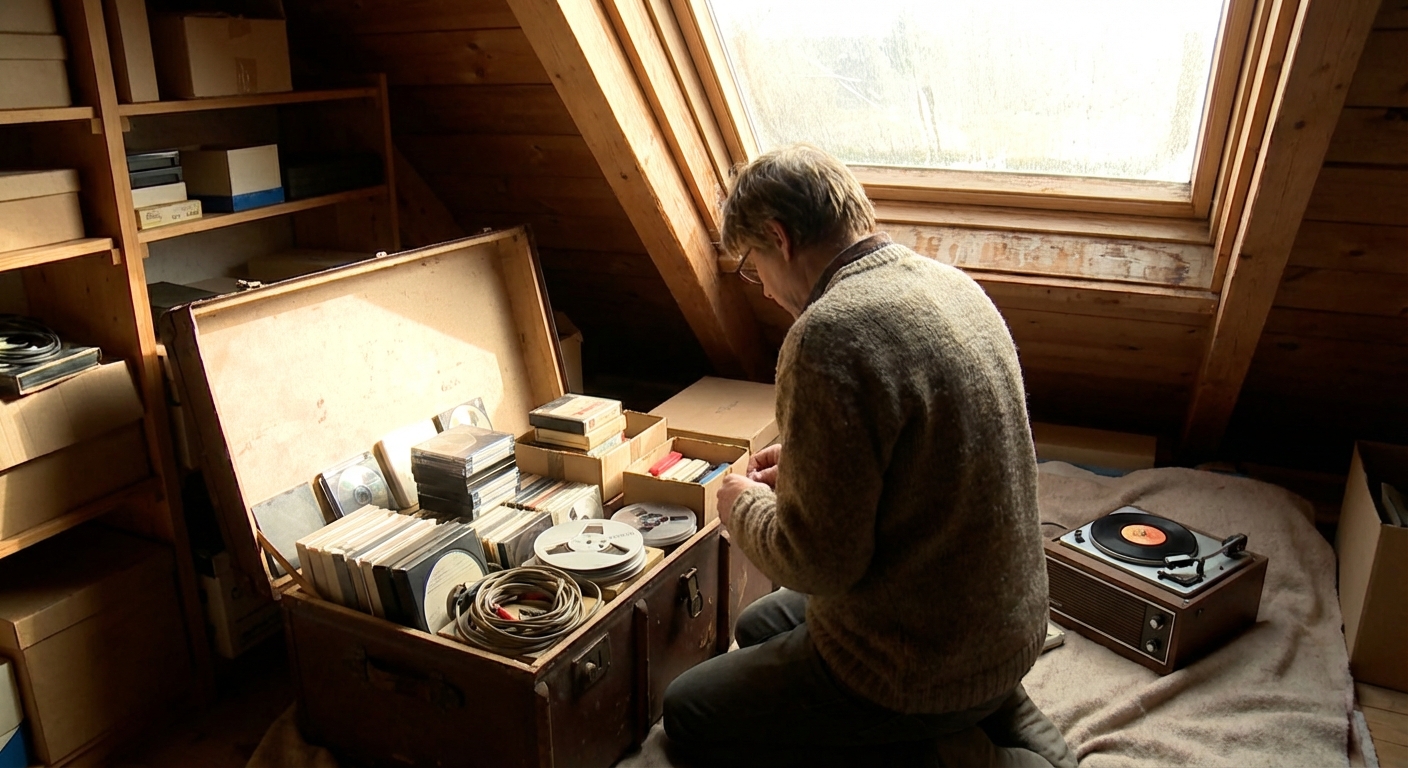
Long before cassettes, audiophiles spun open-reel tape on majestic machines with VU meters and giant reels. Tapes ran at various speeds (1⅞, 3¾, 7½, 15 ips), with higher speeds giving better fidelity.
Why It Mattered
- Wider tape = more magnetic real estate for sound
- Higher speeds = better high-frequency response, lower noise
- Many releases were direct copies of studio masters, now holy grails for collectors
Collector Story
There’s nothing like threading a 10½" metal reel, hitting play, and watching the tape snake across polished heads. Modern enthusiasts hunt down pre-recorded jazz and classical reels, then recap 50-year-old decks to hear them sing again.
3. MiniDisc: The Almost-Perfect Portable
What It Was
Sony’s MiniDisc (MD), launched in the early ’90s, stored digital audio on small magneto-optical discs with a clever compression scheme called ATRAC.
Technical Highlights
- Random access: no rewinding; skip instantly like a CD
- Re-recordable and editable: rename tracks, rearrange order on-device
- Shock-resistant, perfect for portable players
Why It Fell
MD was beloved but stuck between:
- CDs: better known, ubiquitous
- MP3 players: ultimately cheaper and more flexible
Still, loyalists swear ATRAC’s psychoacoustic tricks sound more musical than early MP3s.
Collector Story
Some MD fans maintain elaborate MD libraries, hand-titled with a label maker and colored cases. There’s a ritual joy in recording a mixtape in real time again, complete with fades and track markers.
4. Digital Compact Cassette (DCC): The Cassette That Wasn’t
What It Was
Philips tried to evolve the cassette with DCC in the early ’90s:
- Same overall cassette footprint as analog tapes
- Required special DCC decks
- Stored compressed digital audio using PASC (akin to MP2)
Technical Curiosities
- Backwards-compatible playback: DCC decks could play analog cassettes
- Forward-only: you couldn’t record analog on a DCC shell
- Robust tape shell with sliding metal door, more like a floppy disk than a cassette
Collector Story
DCC is a format that makes tech historians grin: “Look, this is what happens when you refuse to admit the cassette era is ending.”
People who collect DCC today savor the hybrid vibe—old-school reels spinning while digital bits flow.
5. Elcaset: When Bigger Was Not Better
What It Was
Sony’s Elcaset (late ’70s) answered the tape hiss problem by going larger, not smaller:
- Cassette the size of a paperback novel
- Tape width like reel-to-reel (¼")
- Ran at 3¾ ips, twice standard cassette speed
Result
Analog sound that rivaled open-reel with the convenience of a cartridge. But nobody wanted to re-buy an entire system for slightly better fidelity.
Collector Story
Finding an Elcaset deck now is like spotting a unicorn. When one surfaces, it’s usually surrounded by reverent audiophiles mumbling things like “If only the market had understood…”
6. Microcassette: Tiny Tapes, Big Nostalgia
What It Was
Microcassettes lived in answering machines, language learners’ pockets, and journalists’ recorders from the ’70s through early ’00s.
- ⅛" tape in a miniature shell
- Dictation-focused, not hi-fi
Hidden Charm
Some musicians use microcassettes as lo-fi instruments, embracing the warble and grit. The format’s limitations become part of the art—like a built-in nostalgia filter.
7. DAT (Digital Audio Tape): Studio Darling, Consumer Wallflower
What It Was
DAT (mid-’80s onward) ran narrow tape in a compact shell, storing 16-bit, 44.1/48 kHz digital audio—CD quality or better.
Why Studios Loved It
- Perfect clones of digital mixes
- Timecode support
- Portable field recorders
Why Consumers Didn’t
- Decks were expensive
- Major labels pushed back, fearing piracy
Collector Story
Live tapers and engineers still hoard DAT masters. Transferring them now is a race against time: aging transports, sticky tapes, and obsolete heads.
8. Quadraphonic Vinyl: Surround Sound Before Its Time
What It Was
In the ’70s, labels tried four-channel LPs for living-room surround sound. Competing systems (SQ, QS matrix, and CD-4) hid extra channels in clever ways.
Problems
- Needed special decoders and in some cases special cartridges
- Format confusion: not all systems were compatible
Collector Story
Quad vinyl buffs build Franken-systems to decode these records properly. The payoff: swirling, psychedelic mixes that make you feel like you’re inside the band.
9. PlayTape, Pocket Rockers & Toy Formats
What They Were
A whole ecosystem of short-lived novelty tape formats targeted kids and commuters:
- PlayTape (’60s): tiny endless-loop cartridges, often with two songs
- Pocket Rockers (’80s): cartridge players worn on your belt
Lo-fi, cheaply made, and intensely lovable.
Collector Story
Finding a sealed Pocket Rockers cassette in the wild is like unearthing a bubble-gum-scented time capsule. The music quality? Questionable. The nostalgia factor? Off the charts.
Why These Formats Still Sing
Each of these formats is a snapshot of an era’s dreams about how we’d listen to music:
- Bigger for better sound
- Smaller for more portability
- Digital for perfect copies
- Analog for character and charm
For collectors, the joy isn’t just in the sound, but in the engineering quirks, the packaging, and the memories baked into plastic and ferric oxide.
If you stumble on a mysterious cartridge or odd-shaped cassette at a flea market, don’t dismiss it. You might be holding a chapter of audio history that’s quietly waiting for one more play.