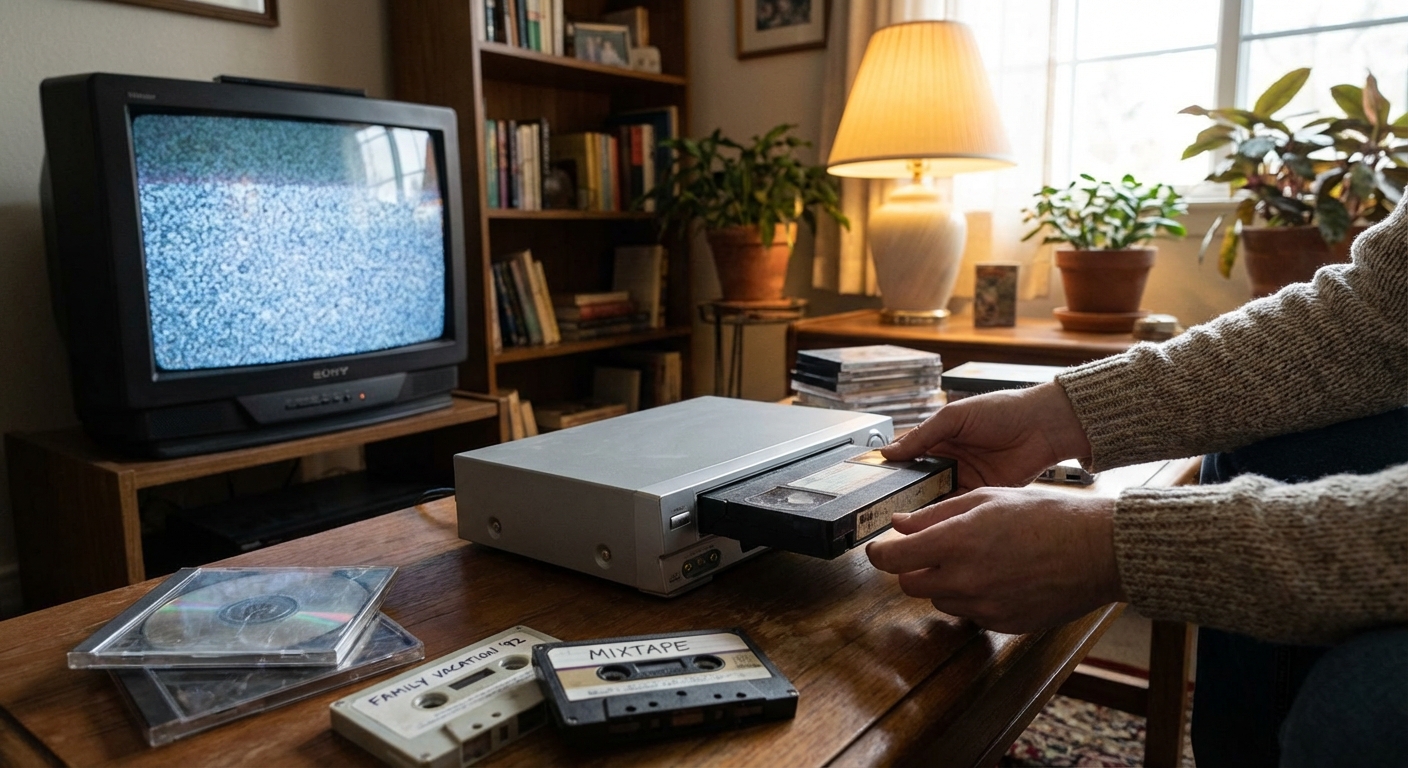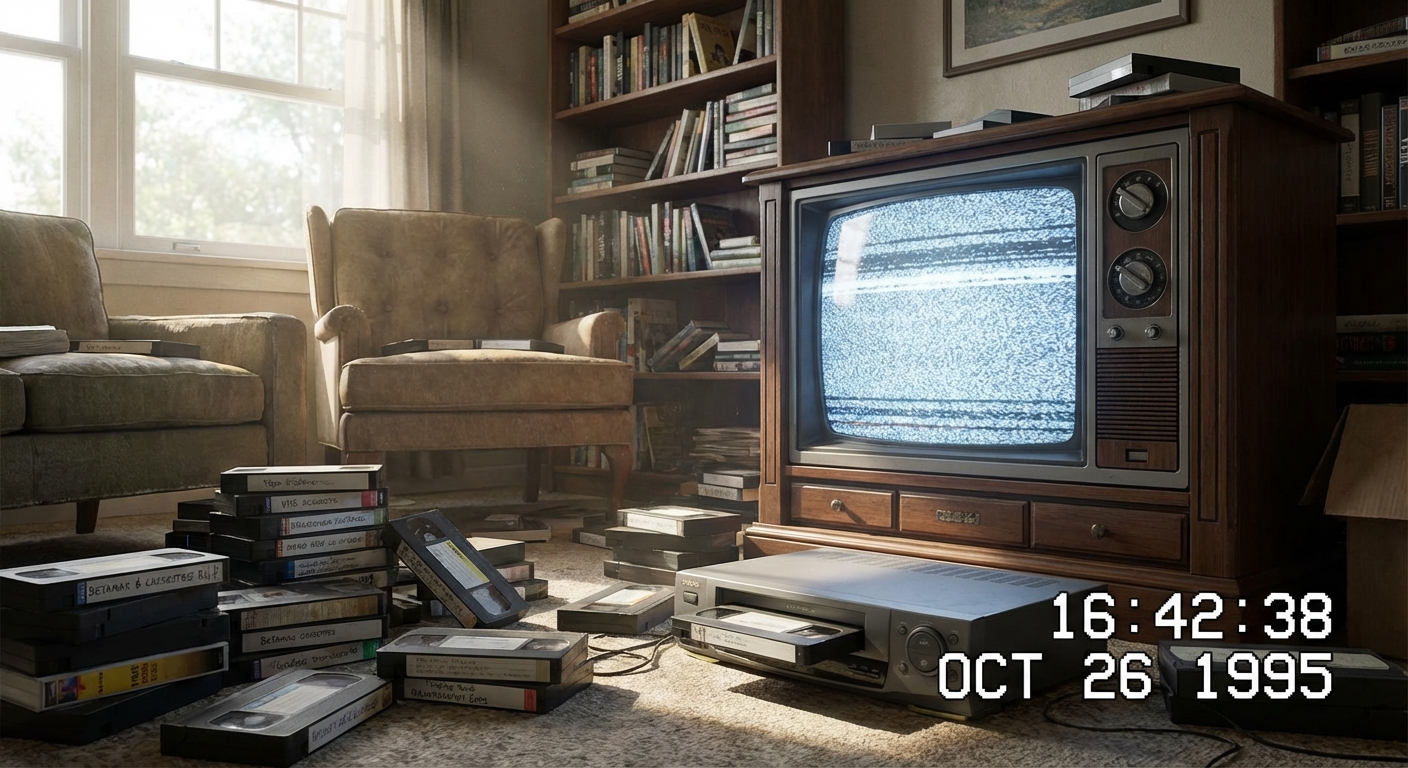
Before streaming queues and 4K autoplay, there was the slow, mechanical drama of getting a tape to behave. You’d press REW, listen to the whirr, and hope the VCR didn’t decide to chew the final ten minutes of your taped-off-TV movie.
When Rewinding Meant Commitment
Lost video formats weren’t just storage—they were events. Loading a tape, tuning the tracking, setting the timer: all tiny rituals that stitched home media into everyday life.
This is a tour through some of the most beloved (and bewildering) video formats that shaped the living room.
Betamax vs. VHS: The Format War That Defined a Generation
How Betamax Tried to Be the Best
Sony’s Betamax arrived in 1975, promising home recording with surprisingly sharp analog picture quality. Technically, it beat VHS:
- Higher resolution: roughly 250–300 lines vs. VHS’s ~240
- Better tape formulation: often more durable, less prone to dropouts
- Compact cassettes: smaller than chunky VHS shells
But Betamax originally recorded just one hour per tape, later extended with slower speeds.
VHS Wins by Playing the Long Game
JVC’s VHS (Video Home System) launched in 1976. It made different design trade-offs:
- Lower quality than Betamax—but still "good enough" for most viewers
- Longer recording time: 2–4 hours early on, later extended with EP/SLP modes
- Open licensing: many manufacturers could produce VHS decks and tapes
The clincher: consumers loved recording full movies and sporting events more than they loved slightly better picture quality. Rental stores followed, stocking shelves with VHS. By the late ’80s, Betamax was a cult niche.
Collector Anecdote: The Betamax Holdout Dad
Ask any collector and you’ll hear a version of this: “My dad swore Betamax was better and refused to buy a VHS player. We had five pristine Betamax tapes and no way to rent anything cool.”
These days, Betamax decks are thrift-store legends. The really dedicated collectors hunt for late-era SuperBeta machines that squeezed out even crisper video. Restoring one can mean recapping dried-out electrolytics, cleaning rubber pinch rollers, and praying to the gear train gods.
LaserDisc: The Giant, Shiny Futurist That Time Forgot
Imagine a vinyl LP, but it plays movies. That’s LaserDisc.
A Technical Marvel (With a Coffee-Table Footprint)
Debuting in 1978, LaserDisc offered:
- Optical readout: like a CD, no head physically touches the disc
- Near-broadcast picture quality (for the time)
- Analog video, digital or analog audio combinations
- Chapter skips and bonus features long before DVDs mainstreamed extras
Each disc was a 12-inch platter, storing about:
- ~30 minutes per side (CAV) with perfect pause and slow-motion, or
- ~60 minutes per side (CLV) with more content but less fancy trick-play
The Double-Sided Workout
Most movies required flipping halfway through—either manually or via a fancy auto-flip player that mechanically reversed the laser pickup. Mid-film side changes became intermissions for snack refills.
Why It Never Took Over
LaserDisc was, frankly, too good for the market:
- Hardware was expensive
- Discs were pricey and bulky
- Picture quality shone on big screens most people didn’t yet own
It thrived with cinephiles and in educational / institutional settings, then gracefully yielded to the DVD.
Collector Anecdote: The Director’s Cut Treasure Hunt
LaserDisc introduced many of us to commentary tracks and letterboxed transfers. Today, collectors still chase:
- Director-preferred cuts never reissued on DVD/Blu-ray
- Box sets with wild packaging (think: Alien head cases, oversized art books)
- PCM audio tracks that some say sound “warmer” than later digital compressions
There’s a special joy in hearing a disc spin up and seeing that silver rainbow under a lamp—analog-era bling.
Video8, Hi8, and MiniDV: The Home-Movie Time Capsules
The Era of the Family Camcorder
Shrinking electronics birthed compact camcorder tape formats in the ’80s and ’90s:
- Video8 (and later Hi8): analog, 8mm-wide tape, small cassettes
- MiniDV: digital video on tiny cassettes, using DV compression
Where VHS dominated pre-recorded rental movies, these formats owned home recordings: birthdays, graduations, chaotic school plays half-obscured by a tall uncle.
Technical Tidbits
- Video8: roughly VHS-like resolution, but in a smaller shell; Hi8 improved bandwidth and clarity
- MiniDV: 720x480 (NTSC) digital, about 25 Mbps; footage captured over FireWire felt incredibly crisp compared to analog dubs
Many higher-end camcorders even had S-Video outputs and manual exposure controls, giving budding filmmakers their first taste of cinematography.
Collector Anecdote: The Shoe Box Archive
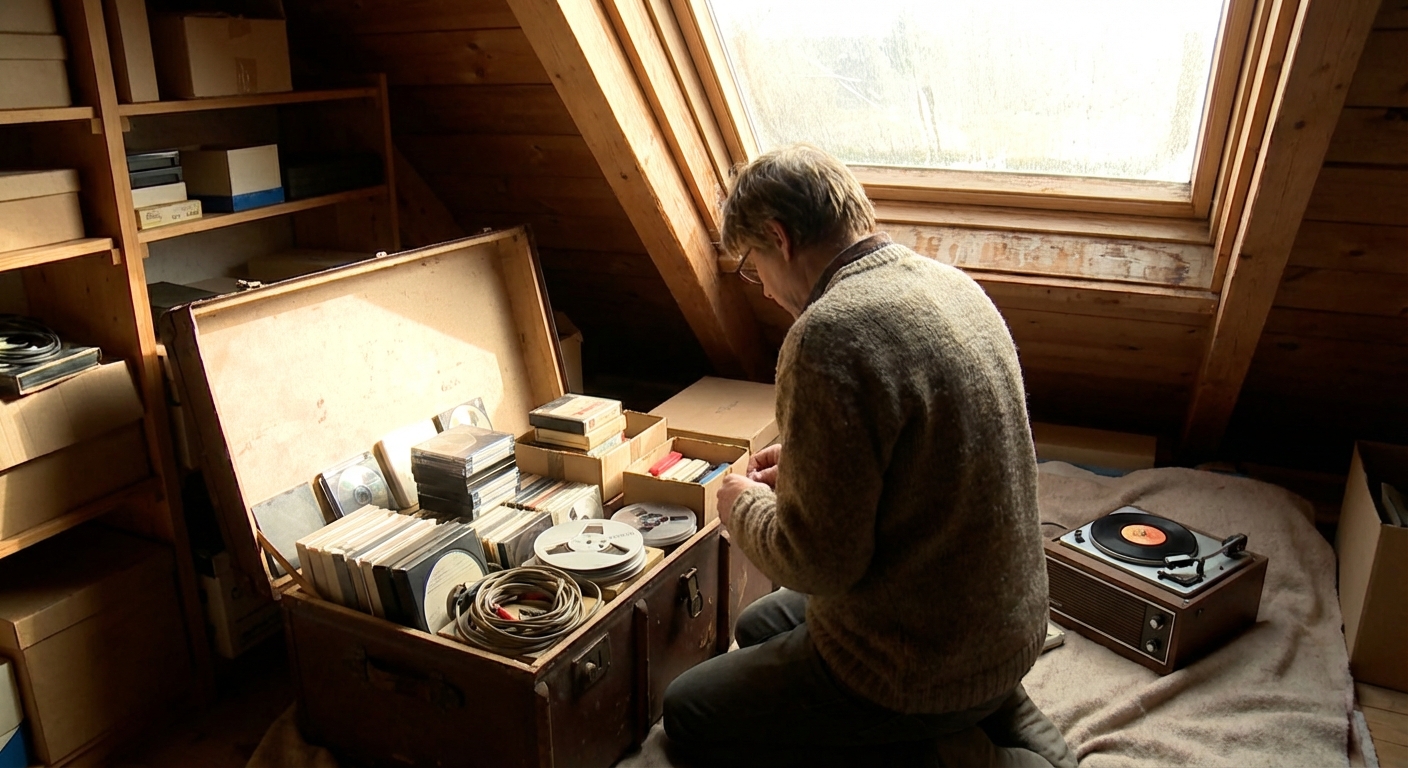
There’s a recurring modern scene: someone finds a shoe box full of 8mm or MiniDV tapes, but the camcorder died long ago. Enter the enthusiast who:
- Scours classifieds for a working deck
- Cleans the transport path with chamois sticks and isopropyl
- Digitizes everything in real time, tape by tape
The reward is priceless: glitchy but heartfelt analog footage of people and places you can’t revisit any other way.
VCD, CED, and Other Strange Paths Not Taken
VCD: CDs That Played Movies
In parts of Asia and other markets, Video CD (VCD) ruled the ’90s:
- MPEG-1 compressed video (~352x240 NTSC)
- 74–80 minutes per disc
- Often played on modified CD players or cheap dedicated units
Picture quality was soft and blocky, but the affordability and portability were hard to beat. You’d often get a movie on two discs, complete with a mid-movie disc swap.
CED: Movies on Vinyl-Like Discs
RCA’s Capacitance Electronic Disc (CED), early ’80s, is perhaps the strangest of the bunch:
- Grooved 12-inch disc, read capacitively by a stylus
- Housed in a plastic caddy you inserted into the player
- Analog video + audio encoded as tiny variations in the groove
It was fragile, expensive to manufacture, and technically finicky. By the time it staggered onto the market, VHS had already won hearts and living rooms.
Collectors today prize CED for its sheer oddity and the wonderfully retro illustrated caddies.
Why These Lost Formats Still Matter
Beyond the resolution charts and tape speeds, these formats embody a particular relationship with media:
- You chose what to watch and committed time to it
- You lived with imperfections: tracking lines, dropouts, side changes
- You connected with machines that whirred, clunked, and occasionally rebelled
For collectors, the charm is as much in the hardware’s personality as in the content:
- The thunk of a VHS tape loading
- The smooth whine of a spinning LaserDisc
- The soft click of a camcorder door snapping shut
In an era when everything is instant, perfect, and invisible, these formats remind us that watching a movie used to be a tactile adventure.
So if you find a dusty deck at a yard sale, don’t just walk past it. It might be a lost portal back to a time when the future of home video came with spinning spools, tracking noise, and the occasional "Please Be Kind, Rewind" sticker.