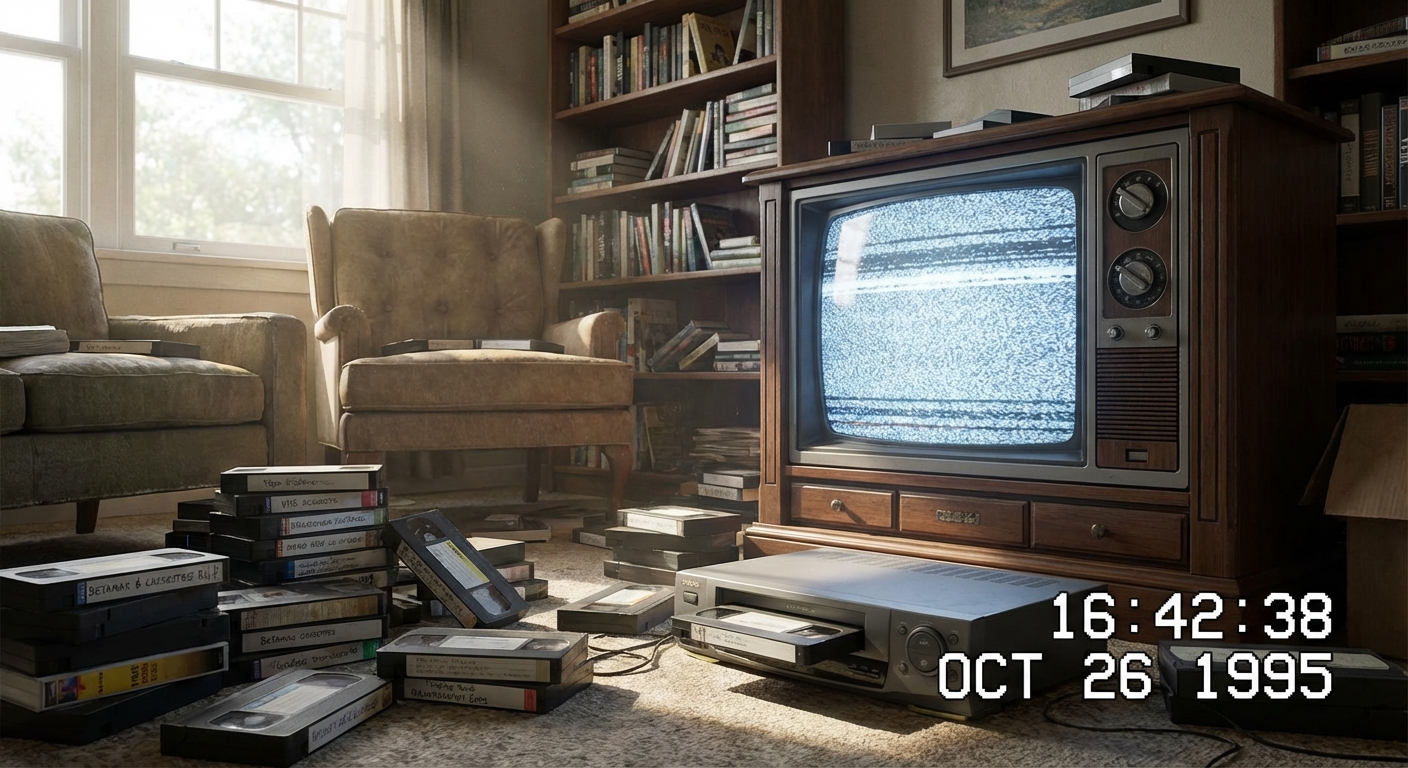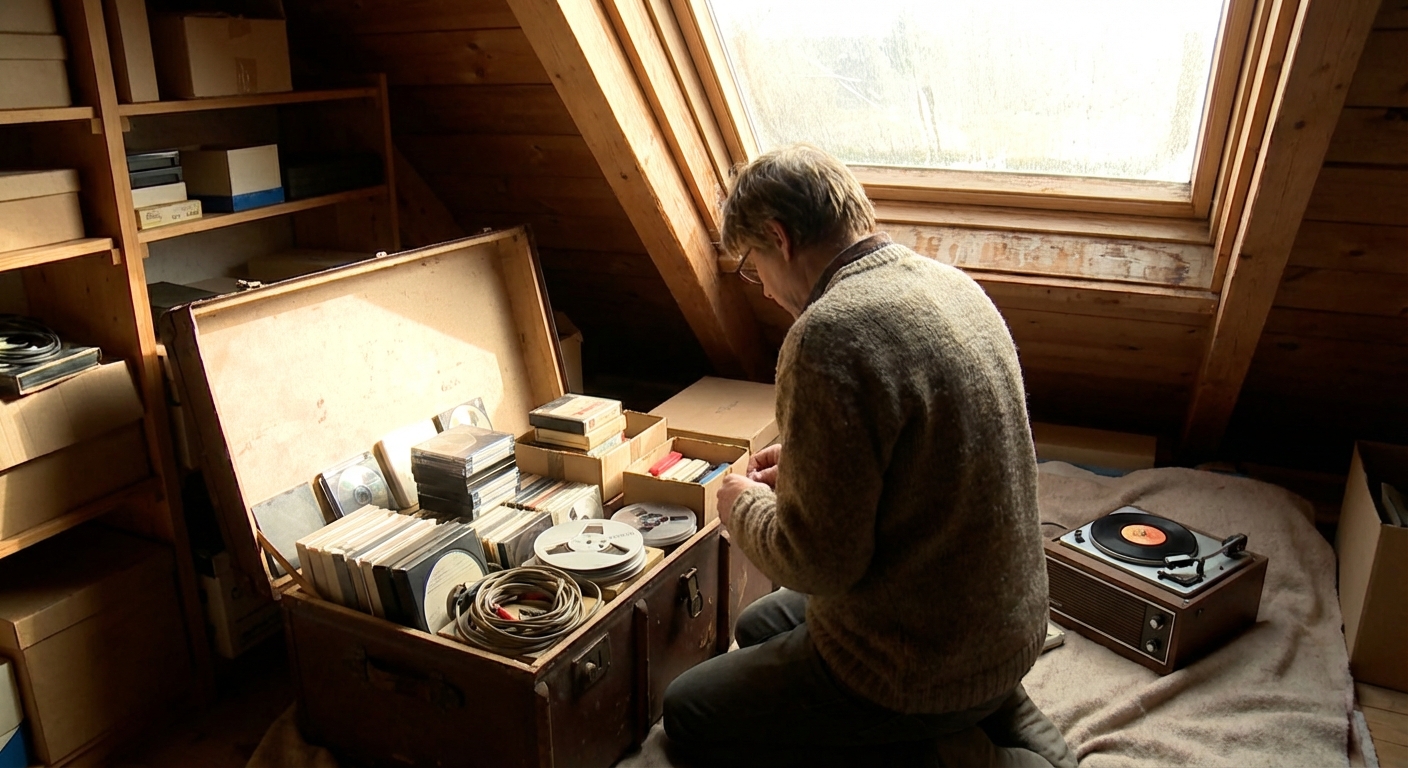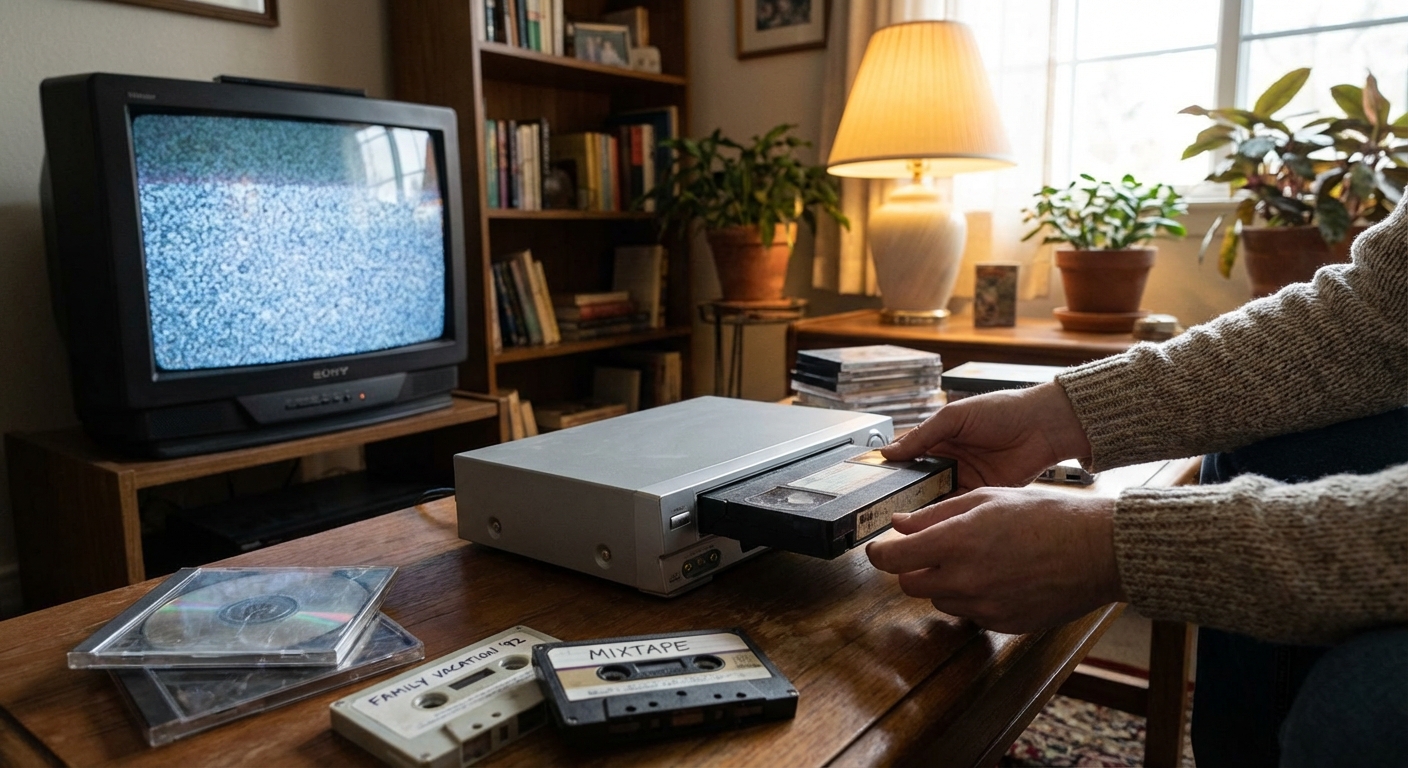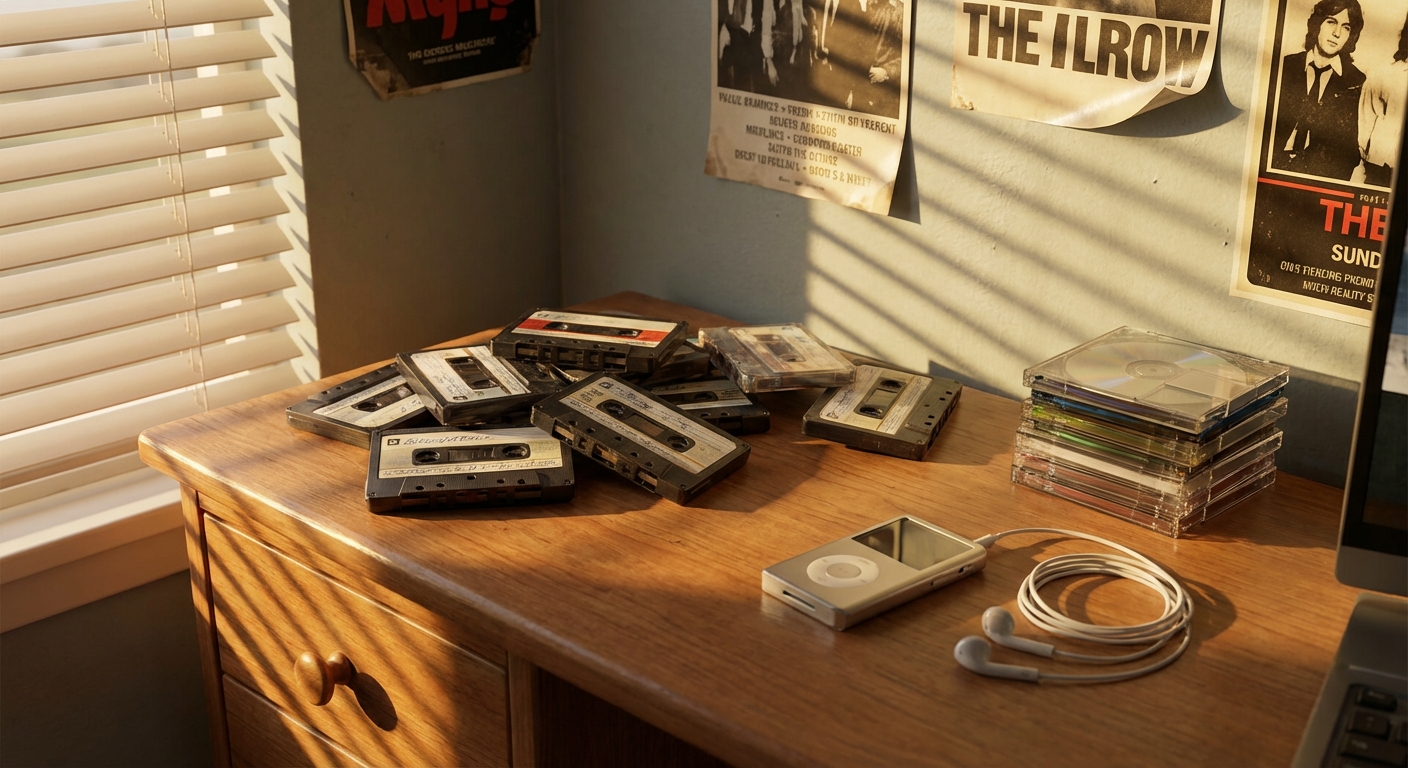
Every generation thinks its way of listening to music is the default. For some, it’s streaming playlists. For others, it’s warbly car cassettes or jewel-cased CDs.
Three Eras, Three Ways of Listening
Let’s line up three pivotal formats—the analog cassette, Sony’s MiniDisc, and the MP3 file—and see what each one got right, where they fell short, and what we quietly left behind along the way.
The Compact Cassette: Imperfect, Intimate, Indestructibly Human
A Quick History
Introduced by Philips in 1963 as a dictation medium, the compact cassette didn’t initially aim for hi-fi glory. But with better tape formulations and decks, it evolved into the home-recording hero of the ’70s–’90s.
Technical Snapshot
- Tape width: ⅛" (3.81 mm)
- Speeds: 1⅞ ips (4.76 cm/s)
- Stereo, analog, typically Type I (ferric), Type II (chrome), or Type IV (metal) tape
- Typical frequency response: roughly 30 Hz–16 kHz with good tape and deck
What It Did Beautifully
- Universality: car stereos, boomboxes, Walkmans, hi-fi decks, dictation machines
- Recordability: anyone with a deck could make a mixtape, bootleg a show, or capture radio
- Tactility: flipping sides, hand-writing J-cards, untangling ribbon with a pencil
Where It Struggled
- Hiss and wow/flutter without Dolby or high-end decks
- Wear from repeated playbacks
- Duplication generations adding noise each step
Yet those limitations added a certain patina. A well-loved cassette sounds like memories feel: slightly faded, occasionally distorted, but warm and unmistakably alive.
MiniDisc: The Near-Future That Almost Stuck
A Different Kind of Disc
Sony launched MiniDisc (MD) in 1992, aiming to combine CD-like convenience with cassette-like recordability. The result was a pocketable square disc in a protective shell, spinning quietly behind a sliding metal door.
Under the Hood
- Medium: magneto-optical disc with a durable plastic shell
- Audio codec: ATRAC (Adaptive Transform Acoustic Coding), a psychoacoustic lossy format
- Capacity: about 74–80 minutes of stereo audio per disc (more with later ATRAC versions)
- True random access: instant seek, skip, and track editing
What It Did Brilliantly
- Editing on the fly: split, combine, and rearrange tracks directly on the device
- Shock resistance: buffering meant jog-free playback, perfect for portable use
- Durability: discs shrugged off scratches that would doom a CD
MiniDisc felt like a futuristic cassette—still personal and hand-curated, but digital and tidy.
Where It Fell Short
- Proprietary ecosystem: mostly Sony gear, limited third-party support
- ATRAC’s reputation (sometimes unfair) as "compressed-sounding"
- CDs and later MP3 players undercut its niche
In hindsight, MD foreshadowed both the playlist mindset and the joy of carefully arranged mixes.
MP3 Files: The Era of Infinite, Invisible Music
A Codec Changes the World
MP3 (MPEG-1 Audio Layer III) emerged in the ’90s as a digital compression format, but it wasn’t until late-decade dial-up and early broadband that it blew everything apart.
Suddenly, music wasn’t tied to a disc or a tape; it was a file—copyable, shareable, endlessly duplicable.
Technical Basics
- Psychoacoustic lossy compression, discarding audio information deemed inaudible
- Common bitrates: 128 kbps (early web standard), 192/256/320 kbps (higher quality)
- Sample rates typically 44.1 kHz
What MP3 Nailed
- Portability: thousands of tracks in your pocket
- Search and sort: metadata, playlists, smart libraries
- Distribution: independent artists bypassed physical media entirely
The MP3 didn’t just change sound; it changed access. The machine whirr disappeared, replaced by silent progress bars.
The Trade-Offs
- Lower bitrates flattened dynamics and high-frequency detail
- The ceremony of listening—choosing a single album, flipping a tape—eroded
- Music became easy to accumulate and just as easy to ignore
Sound Quality: On Paper vs In Practice
Cassette
On a cheap deck with Type I tape, cassette can sound muddy and hissy. But on a good three-head deck with metal tape and Dolby B/C:
- Warm midrange, pleasant saturation when driven
- Subtle compression that flatters rock and pop
- Noise floor that’s audible but familiar
MiniDisc
Early ATRAC at low bitrates could sound slightly smoothed-over in cymbals and airy textures. Later ATRAC implementations were much more transparent.
For many ears:
- Cleaner and quieter than cassette
- Minor artifacts, especially in critical A/B comparisons
MP3
At 128 kbps (the old standard):
- Noticeable swishy artifacts in high frequencies
- Collapsed stereo imaging on complex mixes
At 256–320 kbps:
- Very close to transparent for casual listening
- More revealing of the original master than either cassette or early MiniDisc
Yet technical fidelity and emotional impact aren’t the same scoreboard.
The Rituals We Left Behind
Beyond charts and bitrates, consider the rituals attached to each format.
Cassette Rituals
- Browsing spines in a shoebox on the car floor
- Meticulously planning 45 minutes per side of a mixtape
- Recording late-night radio, hoping the DJ wouldn’t talk over the intro
Each tape bore the scars of its journey: stretched sections, wobble on a favorite chorus, stickers peeling at the edges.
MiniDisc Rituals
- Naming tracks with a tiny jog dial and alphabet scroll
- Color-coding cases for moods or genres
- Meticulously tagging and editing live recordings
Collectors still compare MD to a digital diary: compact entries, neatly labeled, unmistakably personal.
MP3 Rituals
- Drag-and-drop mixtapes to a player, or sync with a library
- Curating playlists—study, road trip, heartbreak, sleep
- Backups on hard drives and cloud accounts rather than shelves
The medium became invisible; only the interface remained.
Collectors’ Corner: Why People Still Chase the Old Stuff
Talk to a cassette or MiniDisc enthusiast today and you’ll hear themes:
- Scarcity: late-era cassette releases or MD-only promos feel like secret editions
- Object-love: shells, cases, liner notes, and even the way mechanisms sound
- Intentional listening: a tape or MD demands commitment; it’s not as easy to skip eternally
Some collectors even hybridize eras:
- Recording modern digital playlists onto cassette or MD
- Using analog saturation to give sterile mixes some grit
- Treating physical formats as "albums" in a world of endless singles
So, Which Was “Best”?
That depends on what you value:
- Cassette if you crave warmth, character, and the romance of mechanical fragility
- MiniDisc if you love hands-on editing with a sci-fi edge, plus pocketable durability
- MP3 if you value ubiquity, convenience, and frictionless access above all
In reality, each format added a chapter to how we love music:
- Cassette taught us to craft playlists by hand
- MiniDisc taught us to curate and edit digital audio personally
- MP3 taught us to carry the world’s music … and also how easy it is for abundance to blur into background noise
The good news: you don’t have to pick just one. You can stream a lossless file into your ears while a cassette spins quietly on the shelf beside you, a tiny analog heartbeat reminding you where it all came from.