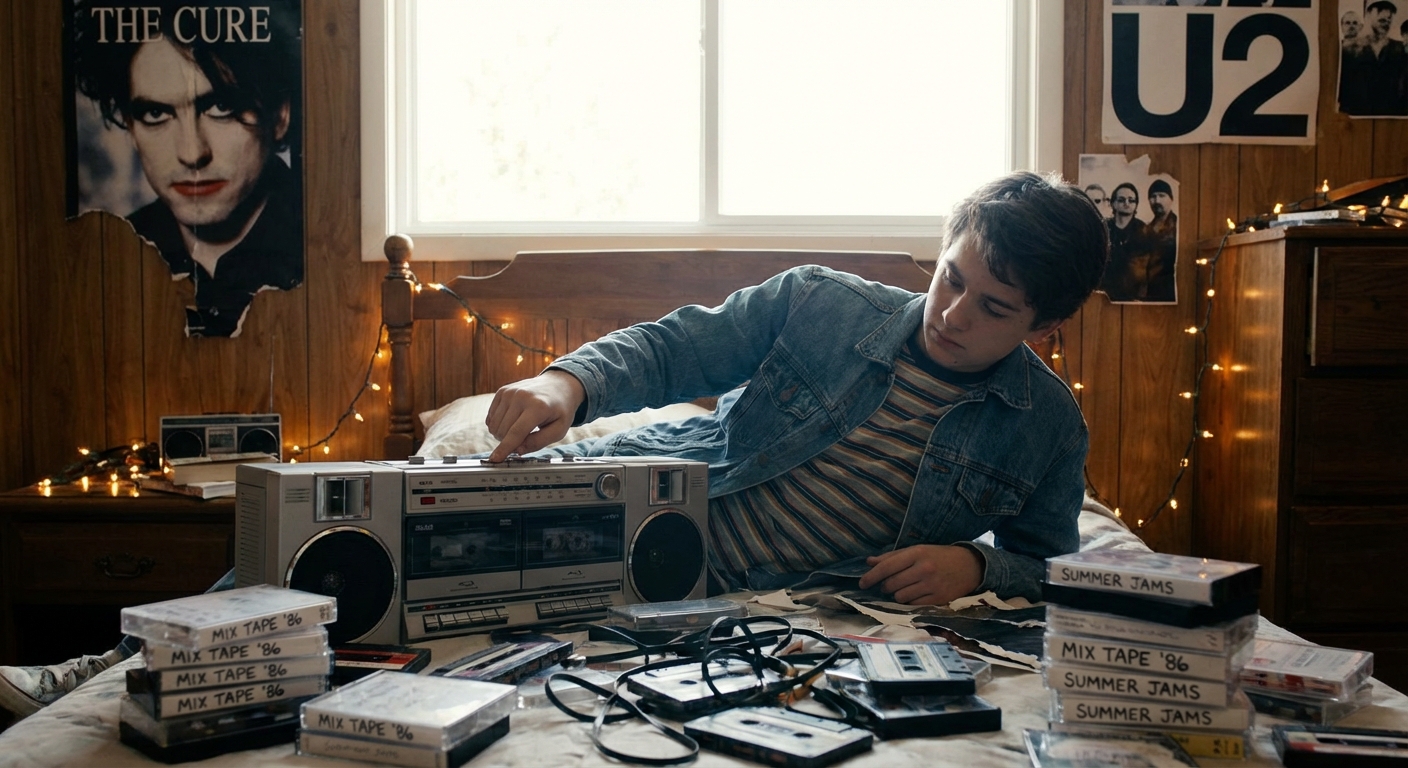
Before algorithms autoplayed the next song, we had something better: the mixtape. Two sides, 90 minutes, and infinite emotional stakes. You timed your favorite song to fit before the leader tape, cursed DJs who talked over intros, and hoped your deck wouldn’t chew the masterpiece you just made for your crush.
When Rewind Meant Holding a Pencil
Welcome to cassette culture—a world where vintage tape decks weren’t just playback machines, but instruments of storytelling.
The Humble Birth of the Compact Cassette
The compact cassette arrived in 1963, courtesy of Philips. Originally, it wasn’t meant to be Hi‑Fi glory:
- Intended for dictation and voice recording.
- Early tapes ran at 1⅞ inches per second (IPS) with limited fidelity.
But the format had superpowers:
- Portable.
- Cheap.
- Easy to duplicate.
By the 1970s, improvements in tape chemistry and deck design catapulted cassettes from office desks to living rooms.
From Toy to Hi-Fi: The Rise of the Serious Tape Deck
Cassette’s transformation into a legitimate audio format hinged on two big technical leaps.
1. Better Tape Types
- Type I (Ferric): The basic brown stuff—good, but limited.
- Type II (Chrome/CrO₂): Better high-frequency response, lower noise.
- Type III (Ferrichrome): A short-lived hybrid experiment.
- Type IV (Metal): The apex predator of tape—high output, wide dynamic range.
Audiophiles flocked to Type II and IV, squeezing impressive performance out of a tiny plastic shell.
2. Noise Reduction: Dolby and Friends
Cassettes are inherently noisy. Enter Dolby:
- Dolby B: Boosted treble during recording, then cut it on playback—reducing hiss.
- Dolby C: More aggressive, better for high-fidelity.
- Dolby S (later, rarer): Almost magical on good decks.
Other systems like dbx offered even more noise reduction with their own quirks.
With the right tape and Dolby engaged, cassette started sounding… shockingly good.
Three Heads, Dual Caps, and Why Deck Nerds Care
Not all tape decks are equal. A few technical details separate the casual boombox from the serious gear.
Heads: Two vs. Three
- Two-head decks: One combined record/play head + one erase head.
- Three-head decks: Separate record, playback, and erase heads.
Three-head designs allow off-tape monitoring while recording—you hear what’s actually on the tape, in real time. They also allow optimized head gaps and materials for recording vs. playback.
Transport: The Tape Path Matters
- Single capstan: Simpler, common in midrange decks.
- Dual capstan: Better tape tension and stability.
Good transports:
- Maintain consistent speed (low wow & flutter).
- Keep the tape firmly and evenly pressed against the heads.
That’s how you get crisp transients instead of warbly mush.
The Mixtape as a Love Language
Ask any cassette kid: the mixtape was a medium of emotion as much as audio.
You became a curator, a sequence artist:
- Track 1: A bold opener.
- Mid-side: A thematic pivot.
- Last track on Side B: The emotional KO.
Anecdote: The Bus-Ride Soundtrack
One collector recalls making bus-ride tapes in the 80s:
"I had this clunky Sanyo deck with meters that barely worked, but I’d stay up late, finger on the pause button between tracks, making a perfect sequence for the school bus: metal on Side A, synthpop on Side B. The bus had the worst, rattliest cassette player—but when my tape was in, that bus was my arena."
Anecdote: The Long-Distance Mixtape Chain
In the 90s, a small group of friends traded cassettes by mail across countries, each adding a few tracks and notes inside the J-card. Years later, those tapes still exist, full of handwriting, stickers, and discoveries.
"Streaming has more music, but those tapes have more us in them."
Why Collect Cassette Decks Today?
In a world of bit-perfect streaming, why are people hoarding Nakamichis, Akais, and Pioneers like dragon treasure?
1. The Sound (Yes, Really)
A top-tier deck, calibrated and fed quality tape, can sound unexpectedly lush:
- Slight compression that flatters mixes.
- Gentle rounding of transients.
- A noise floor that feels more like a room than a void.
Is it as clean as high-res digital? No. Is it musical and addictive? Absolutely.
2. The Mechanics
Vintage decks are kinetic art:
- Fluorescent peak meters dancing to the music.
- Precision gears and belts whirring into motion.
- Soft-touch transports that engage with a satisfying clunk.
3. The Object Itself
Tapes are things:
- You can write on them, draw on them, gift them.
- You can see your collection grow in a shoebox.
- You can actually hold your playlist.
What to Look For in a Vintage Cassette Deck
If you’re tempted to join the cassette cult, here’s a quick, practical rundown.
Basic Health Check
- Does it play, fast-forward, and rewind without struggling?
- Any strange squeaks or grinding?
- Do meters or level indicators respond to audio?
Belts and idlers can be replaced, but a slipping or noisy transport can signal deeper issues.
Heads and Alignment
- Inspect the heads: no deep grooves or obvious damage.
- Clean them with isopropyl and inspect again.
Poor alignment can be fixed by a tech, but chewed-up heads are a bigger problem.
Features That Matter
- 3-head vs. 2-head: 3-head if you’re serious about recording.
- Dolby B/C at minimum.
- Bias and level calibration controls are a big plus.
- Direct-drive capstan or dual-capstan transports are signs of a serious deck.
Cassettes in Today’s Culture: The Lo-Fi Counterspell
Cassettes have snuck back into the cultural bloodstream:
- Indie bands releasing limited-run tapes.
- Labels curating genre-specific cassette series.
- Beatmakers and ambient artists using tape for its texture.
The format’s limitations have become its charm:
- Finite length = intentional sequencing.
- Fragility = care and attention.
- Imperfections = character.
In a frictionless digital world, the resistance of tape feels… grounding.
Keeping the Magic Rolling
If you decide to live the tape life, a few habits keep the wheels turning:
- Clean heads and capstan regularly.
- Demagnetize heads occasionally.
- Store tapes away from heat and magnets.
- Fast-forward/rewind long-stored tapes once in a while to reduce print-through.
These rituals become part of the joy—little acts of care that keep the stories on those thin ribbons of oxide alive.
The Rewind That Never Really Ends
Cassettes and tape decks are, in many ways, gloriously unnecessary now. And that’s exactly why they matter. They turn listening into doing. They refuse to be background. They demand a little of you: a pause button timed, a level carefully set, a song chosen with intent.
Somewhere in a thrift store, a dual-well deck waits with its door slightly ajar. Pop it open, slide in a tape, and press play. The heads engage, the reels begin to turn, and suddenly you’re not just consuming music—you’re collaborating with it, one little spinning rectangle at a time.