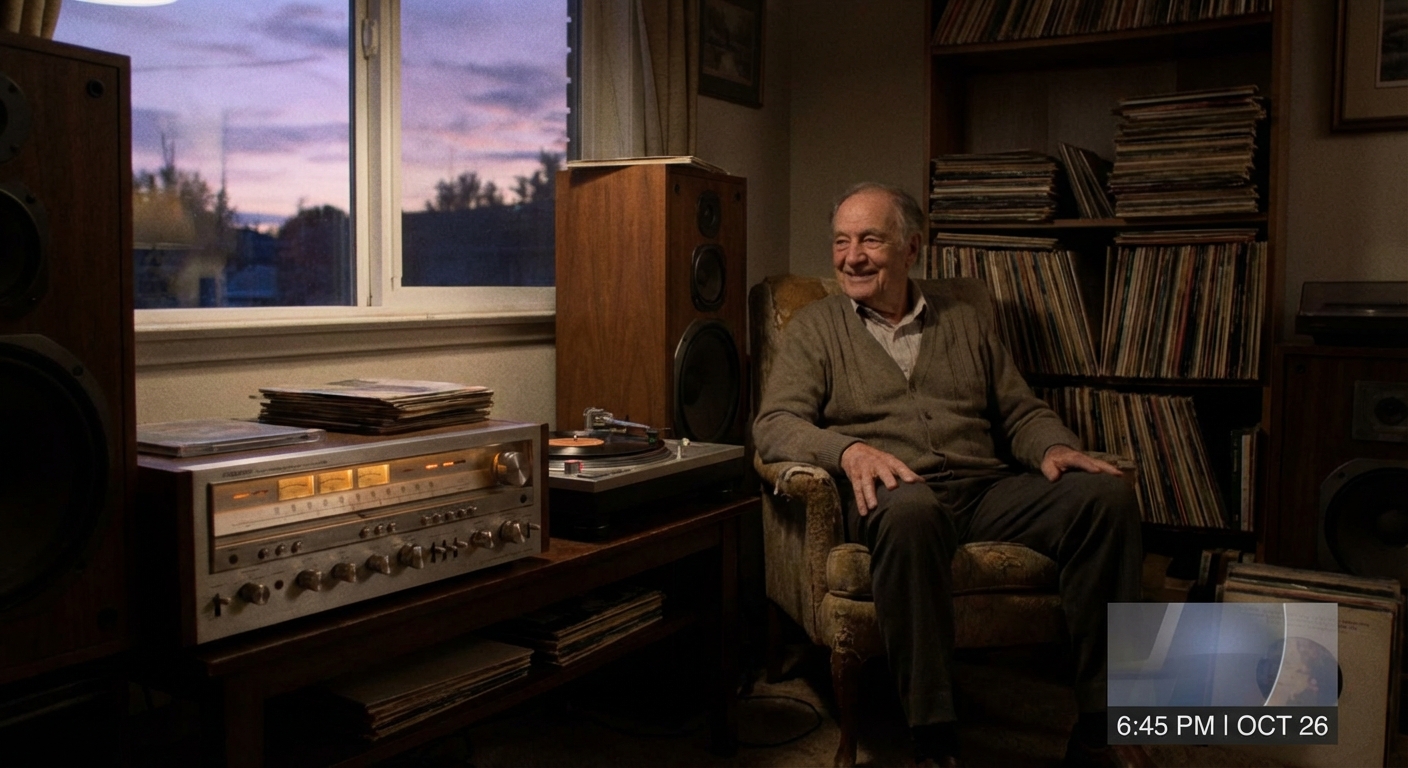
For a lot of us, the vintage audio bug bit when a turntable came to life for the first time. The platter spun, the arm glided over, and that tiny stylus dropped like a spaceship landing on another planet. Then—crackle, hiss, and suddenly music with a kind of presence that felt suspiciously like magic.
The First Time the Platter Moved
If you’ve been eyeing old turntables at flea markets or peeking into your parents’ attic, this guide is for you: a playful but practical walk through choosing, understanding, and living with a vintage deck.
A Quick Spin Through Turntable History
The 1950s–60s: Idler-Drive Workhorses
Early hi‑fi turntables were built like industrial gear:
- Idler drive: A rubber wheel linked the motor to the platter.
- Torque for days: Great speed stability and quick start-up.
- Brands like Dual, Garrard, and Lenco ruled the roost.
These machines were originally designed for broadcast and heavy household use. They can be wonderfully musical, but often need more restoration and adjustment.
The 1970s: Belt-Drive vs. Direct-Drive
The 70s were the golden age of vinyl hardware:
- Belt-drive: A motor spins a rubber belt that turns the platter.
- Pros: Mechanically isolated from motor vibration; quieter.
- Cons: Belts stretch and need replacement.
- Direct-drive: The motor is the spindle.
- Pros: Very stable speed, great torque, loved by DJs.
- Cons: More complex, potential for motor noise in cheaper models.
This era gave us iconic decks from Technics, Thorens, Pioneer, Yamaha, Denon, and others.
The 1980s: Automation and Plastic… and Some Hidden Gems
Turntables started going "convenience first":
- Fully automatic arms.
- More plastic, less metal.
- Compact, system-matching designs.
Still, many 80s decks—especially from Japanese makers—are sleepers: modest-looking, well-engineered, and ripe for rediscovery.
Manual, Semi, or Fully Automatic?
The tonearm dance is part of the charm, but how much do you want to participate?
- Manual: You cue the arm up, move it over the record, and return it at the end.
- Pros: Simple, often more robust and easier to service.
- Cons: Forget it at the end of a record, and the stylus rides the runout groove forever.
- Semi-automatic: You start it; it returns the arm at the end.
- Sweet spot for many collectors.
- Fully automatic: Press a button. It does everything.
- Great convenience, but more mechanisms to age and gum up.
If you’re comfortable with a little ritual and fewer moving parts, manual or semi-automatic is often best for vintage longevity.
What Really Matters Under the Dust Cover
When you’re eyeing a vintage turntable, here’s the playful-but-serious checklist.
1. Plinth and Build Quality
The plinth (base) should feel solid:
- Wood or dense composite > hollow plastic.
- Tap it lightly: a dull thud is better than a bright, ringing sound.
A heavier, non-resonant plinth means fewer vibrations climbing into your music.
2. Platter and Bearing
Gently spin the platter with the power off:
- It should rotate smoothly and silently.
- No scraping or wobble.
A high-quality bearing is critical. If it feels like a lazy fidget spinner, that’s good. If it feels like a rusty wheelbarrow, not so much.
3. Tonearm Condition
Look for:
- Straight, undamaged arm.
- Smooth horizontal and vertical movement.
- Intact anti-skate mechanism.
- Counterweight present and adjustable.
Wiggle the arm lightly—no obvious play or grinding.
4. Motor and Speed Stability
With the deck powered on:
- Listen for excessive hum or mechanical noise.
- Check speed with a strobe disc or smartphone app.
Some wow & flutter is normal in old gear, but it shouldn’t sound seasick.
5. Cartridge and Stylus
Many vintage decks come with a cartridge already installed. Treat the stylus (needle) as guilty until proven innocent:
- Assume you’ll replace the stylus, bare minimum.
- If the cartridge is from a reputable brand (Shure, Audio-Technica, Ortofon, Grado, etc.), a new stylus can be an easy upgrade.
Little Technical Bits (That Make a Big Difference)
Tracking Force
The downward pressure of the stylus on the record, measured in grams.
- Too light: mistracking, distortion, and even more wear.
- Too heavy: unnecessary wear on records and stylus.
Use a simple digital stylus scale and set within the manufacturer’s recommended range.
Alignment and Overhang
The cartridge must be aligned so the stylus sits correctly in the groove.
- Use a protractor (often printable) for your specific tonearm geometry.
- Small adjustments can yield big improvements in clarity and imaging.
Anti-Skate
This compensates for the inward pull on the arm as it tracks.
- Usually set to roughly the same value as tracking force.
- Too little or too much can cause uneven wear and mistracking.
Collector Anecdotes from the Vinyl Trenches
The Attic Thorens
One Cassette Lore reader found a Thorens TD‑160 buried under Christmas decorations. The dust cover was cracked, the belt had turned to licorice, but:
- The bearing was smooth.
- The tonearm was straight.
- The original Shure cartridge just needed a new stylus.
After a new belt, oil, and careful setup, it became their daily driver:
"It looks like it survived a small war, but it plays like a jazz club. I like that it wears its history on the outside and keeps the magic inside."
The Thrift Store Technics
Another collector walked into a thrift store and noticed a familiar shape under a pile of VCRs: a Technics SL‑1200, dusty but intact. Priced as "Old Record Player – $15".
A weekend of cleaning, a new mat, and a fresh cartridge later, they had a world-class deck that had likely DJ’d weddings and parties for decades.
"It’s got a couple of cigarette burns and someone carved initials into the plinth. But I swear it plays funk records with extra swagger."
Matching a Vintage Turntable to a Modern Setup
You don’t need an all-vintage system to enjoy a vintage deck.
- Make sure your amplifier or receiver has a PHONO input.
- If not, use an outboard phono preamp between turntable and line input.
- Keep the turntable away from big speakers to reduce feedback and vibration.
Even streaming-first systems can gain a tactile, analog heart when a turntable joins the party.
Living With It: Maintenance as a Gentle Ritual
Part of the charm of vintage is that it asks you to participate.
- Clean records with a carbon fiber brush before play.
- Replace belts every few years (if belt-drive).
- Oil the main bearing and motor when recommended.
- Keep the stylus clean—a gentle brush from back to front.
These little care rituals become part of the listening experience, a counterpoint to streaming’s frictionless, forgettable ease.
Why Vintage Turntables Still Matter
In a world where music can appear from thin air at a voice command, a vintage turntable is gloriously, stubbornly physical. You lower the arm, and the record responds. The sound isn’t perfect in a laboratory sense—but it has texture, weight, and that faint bed of surface noise that says, "A real thing is happening here."
Choosing a vintage deck means choosing a slower rhythm: aligning a cartridge instead of updating firmware, cleaning a record instead of skipping a track three seconds in.
And when that platter finally spins and your favorite album blooms to life, you’ll understand why so many of us never stopped spinning time in circles.