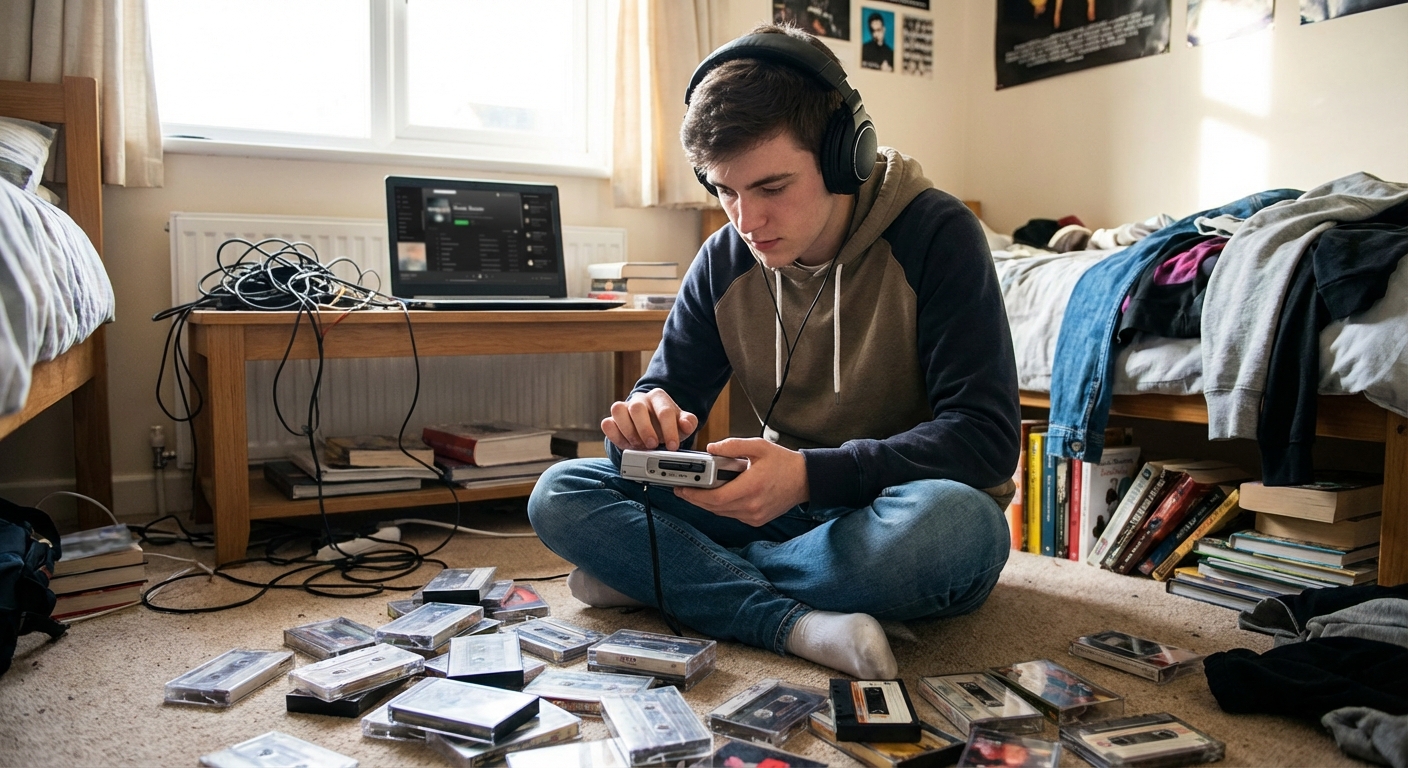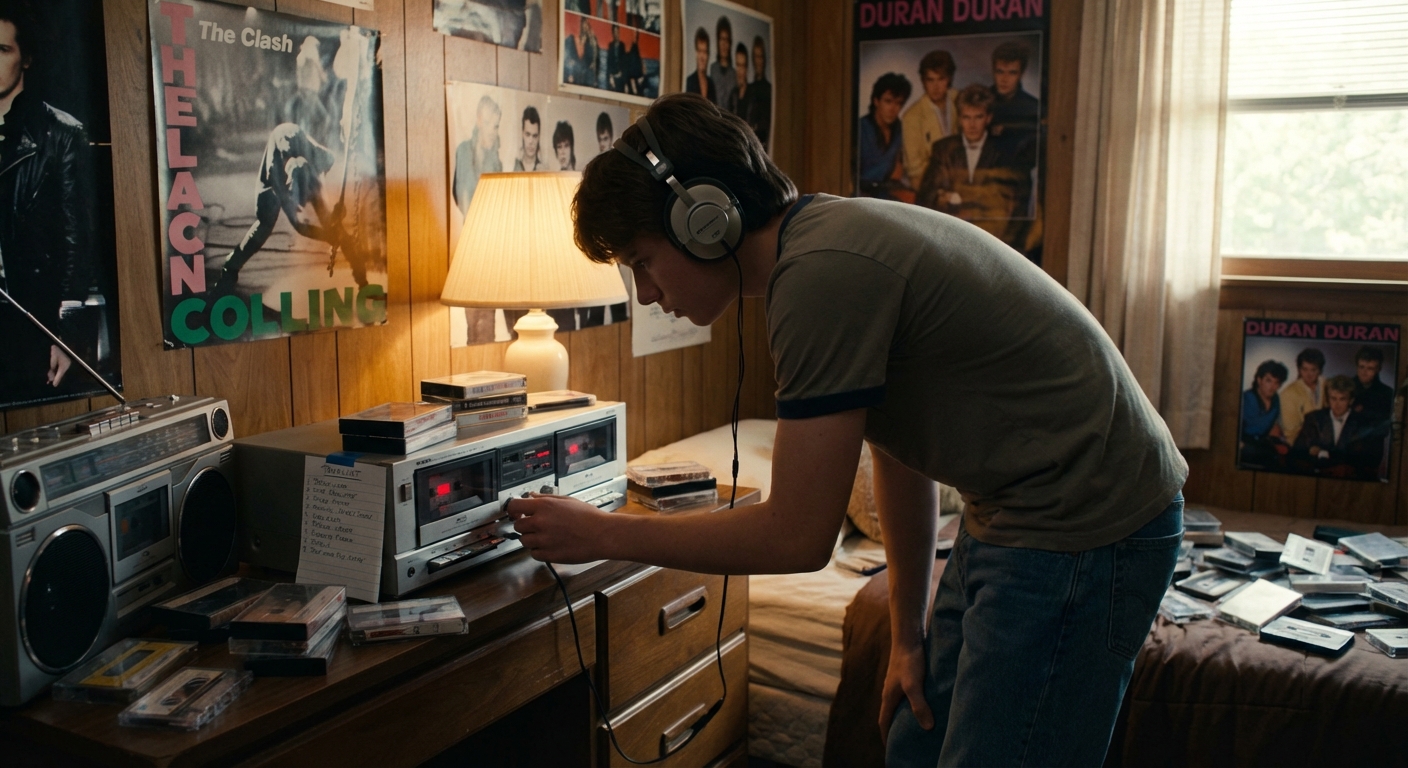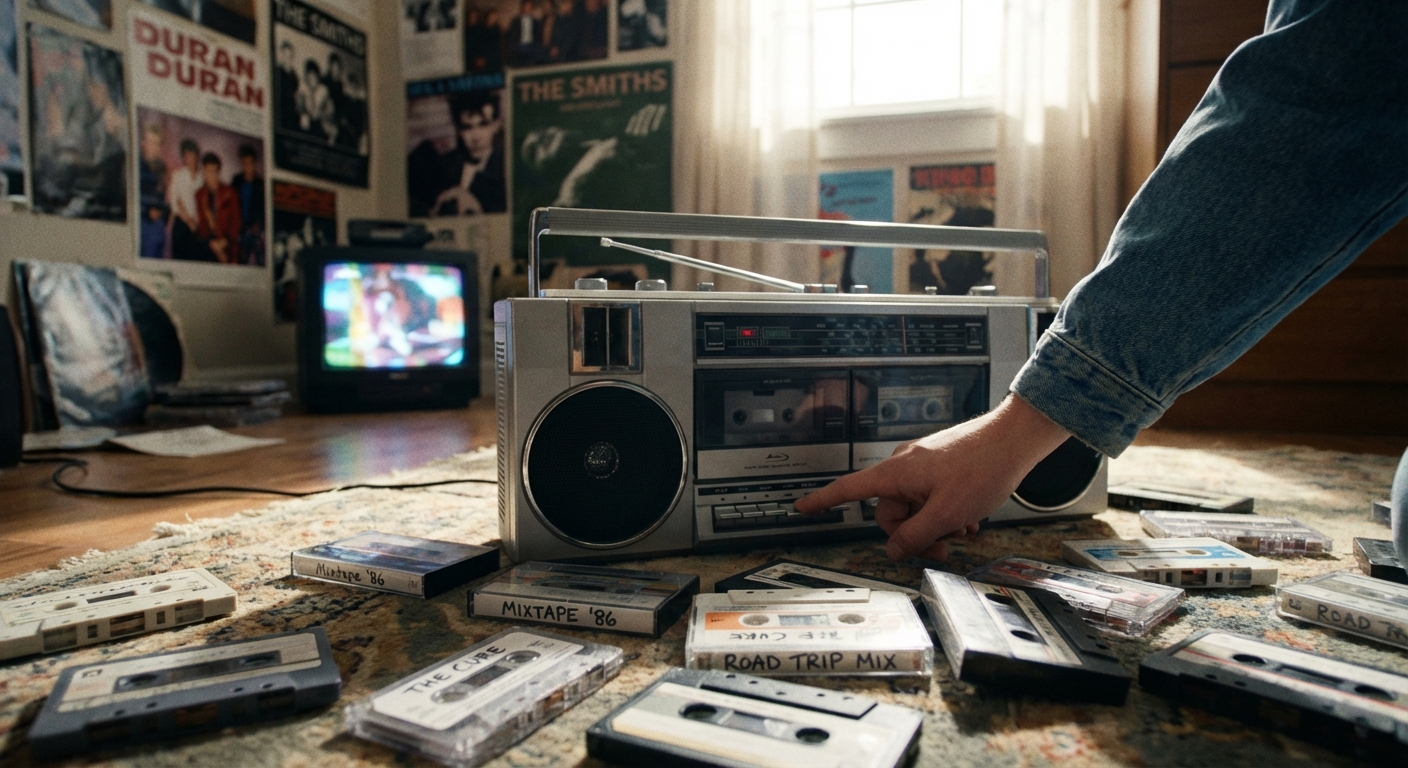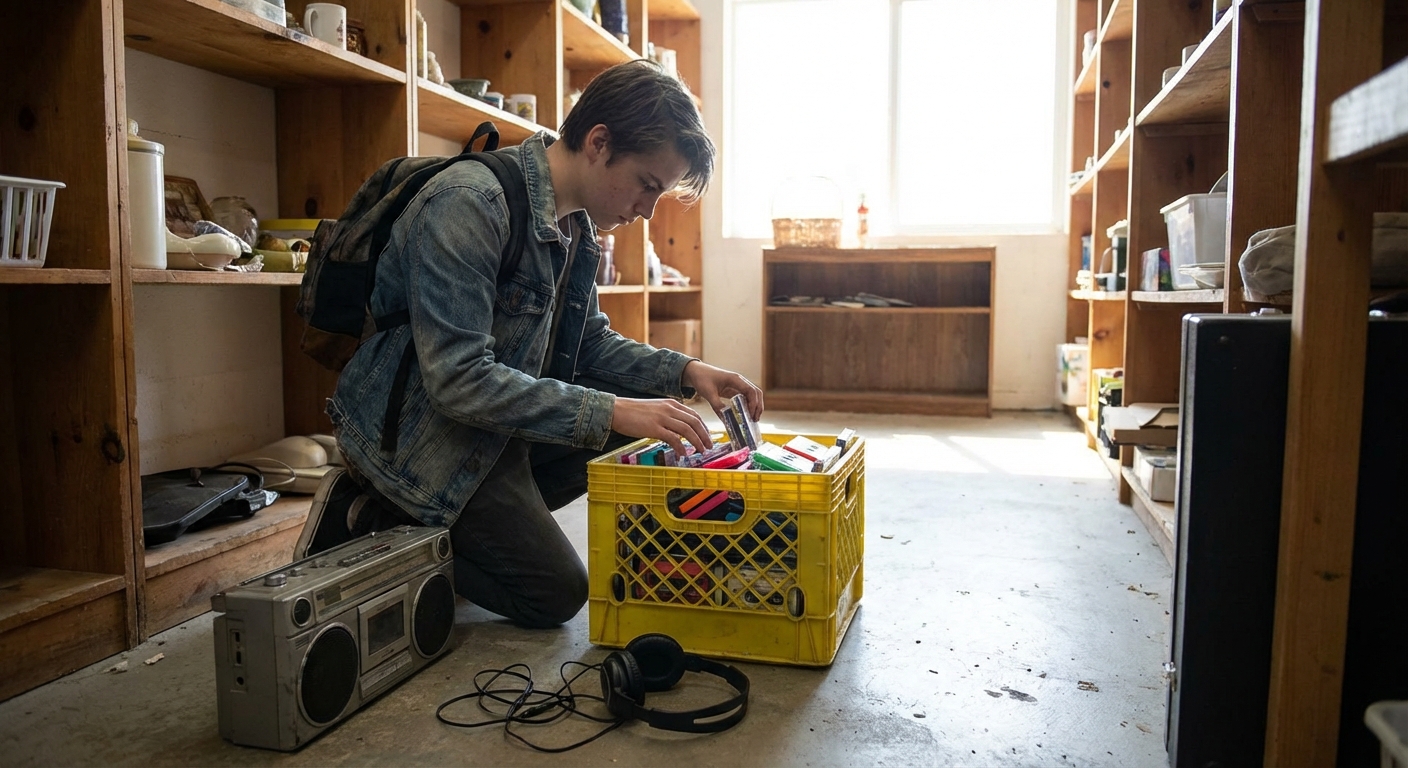
Cassette hunting is scavenger hunt meets time travel. You’re not just “shopping”; you’re flipping through half-forgotten summers, old bedroom windows, and former car dashboards.
The Joy of the Unexpected Tape
If you’ve ever felt your pulse quicken at the sight of a dusty plastic bin labeled “$1 each,” this guide is for you.
We’ll cover where to look, what to check, and how to gently rescue the gems from the junk—without losing the fun, playful spirit that makes cassette collecting so addictive.
Where the Good Tapes Hide
You can buy sealed cassettes online, sure—but the real stories live in the wild.
1. Thrift Stores
Pros:
- Constant turnover.
- Dirt-cheap prices.
- Wild variety: pop, gospel, kids’ tapes, regional oddities.
Tips:
- Check every rack: tapes can be in electronics, books, or random housewares.
- Look for unlabeled or handwritten spines—home-dubbed tapes often hold unique mixes, old radio shows, or local bands.
2. Flea Markets and Swap Meets
Pros:
- Sellers more willing to negotiate.
- Collections often come in from storage units or estate clean-outs.
Tips:
- Go early for best selection.
- Chat with sellers: “Got any tapes that aren’t out yet?” often yields a box from under the table.
3. Garage and Yard Sales
Pros:
- Access to a person’s actual youth collection.
- Potential for “take the whole box for $5” deals.
Tips:
- Ask directly: “Any old tapes or Walkmans around?” People forget they have them.
- Scan for old car stereos—tapes are often nearby.
4. Record Shops
Pros:
- Curated selection.
- Better genre clustering.
Tips:
- Don’t skip the cheap bins—that’s where the oddities and promos often hide.
- Smaller indie shops sometimes have local band tapes from the 80s/90s.
What to Hunt For: Beyond Popular Titles
Everyone knows the iconic albums, but cassette hunting becomes magical when you start chasing the weird and hyper-specific.
Categories Worth Grabbing
- Local/Regional Releases: Bands from your town, church choirs, community choirs, regional rappers.
- Radio Compilations: Label samplers, local station promo tapes.
- Mixtapes: Handwriting on the spine is usually a good sign.
- Children’s and Educational Tapes: Vintage language courses, storybooks with “turn the page” chimes, classroom recordings.
- Spoken Word and Oddities: Self-help, poetry, motivational speeches, UFO lectures.
These often never saw wide digital release, making the cassette the primary surviving format.
Quick Condition Check: The 30-Second Inspection
You’re kneeling on a concrete floor. The bin smells like an old garage. You can’t do a full lab test, but you can avoid heartbreak.
The Outside
- Case: Cracks are fine (cases are replaceable), but avoid severe warping.
- J-card: Fading is cosmetic; water damage might mean mold inside.
The Shell
- Check both sides for cracks or splits.
- Prefer screw-shells over welded: easier to repair.
- Look for warping—does it sit flat on a table?
The Tape Itself
Hold the tape up to light:
- Is the tape packed evenly on the reels?
- Any white fuzz or spots (mold warning)?
- Is the tape loose with big loops? (Sometimes fixable with a pencil wind.)
If you’re unsure but intrigued, remember: at a dollar or two per tape, you’re buying a story as much as a sound source.
Understanding Tape Types (For the Slightly Nerdy Collector)
Not all tapes are magnetically equal. On the shells, you might see:
- Type I (Ferric/Normal Bias): Most common. Warm, slightly noisier.
- Type II (Chrome/High Bias): Better highs, less hiss. Often marked “CrO₂” or “High Bias 70µs EQ.”
- Type III (Ferrochrome): Rare hybrid. Interesting, but not essential.
- Type IV (Metal): Premium; louder and cleaner. Usually prized by recordists.
Commercial albums are mostly Type I or II. For home-dubbed tapes, Chrome and Metal blanks are collector candy—especially with original handwritten tracklists intact.
The Charm of Home-Dubbed Tapes
Many hunters overlook the tapes that don’t look official. Big mistake.
Handwritten J-cards can hide:
- Live FM broadcasts, complete with DJ chatter.
- Bedroom-produced demos.
- Carefully sequenced mixtapes that tell invisible love stories.
A Real-World Find
One collector picked up a tape labeled only “JEN’S CAR MIX 97.” Inside:
- Side A: Wall-to-wall pop-punk and ska.
- Side B: Slower alt-rock, with two songs awkwardly cut by traffic announcements.
The tape ends with a muffled voice: “If you’re hearing this, I miss you, okay?” That’s not just a mixtape; it’s someone’s emotional archaeology.
These are the finds that make cassette hunting feel like respectful eavesdropping on history.
Negotiating Without Being That Collector
Haggling is part of the flea-market game, but there’s an art to it.
- Be fair: If a seller’s asking 50 cents a tape, maybe don’t bargain them down to a quarter unless you’re taking the whole box.
- Bundle smartly: “What would you take for all of these?” often gets you a kind price.
- Share a little context: “This is a local band from the 80s—I collect these.” Sellers often respond well to genuine enthusiasm.
Remember: you’re not just buying plastic; you’re often helping someone clear space while you preserve a slice of culture.
First Listen Ritual: Bringing the Tape Home
The hunt isn’t over when you pay. The best part is the first listen.
Recommended ritual:
- Clean your deck heads.
- If the tape looks fragile, fast-forward and rewind once.
- Sit down—no multitasking.
- Play from the beginning. Don’t skip.
For mixtapes and unknowns, keep a notepad or your phone handy to jot down standout tracks or bizarre ad snippets.
When to Walk Away
Not every tape is worth the shelf space. Consider leaving it behind if:
- The tape smells strongly musty, like a wet basement.
- You see visible mold inside the shell.
- The shell is warped and the reels won’t spin.
- It’s a super-common title in terrible condition (think: sun-melted mega-sellers you see everywhere).
You’re preserving history, not adopting every orphan.
The Slow Art of Getting Good at Hunting
Over time, your internal tape radar sharpens:
- You’ll recognize label logos from across the bin.
- You’ll spot early pressings by spine design alone.
- You’ll get a feel for which neighborhoods or towns yield the best regional oddities.
Veteran hunters can tell you which thrift shop in a city is secretly the cassette goldmine. Part of the fun is discovering your own.
Why It Still Matters to Dig for Plastic
Digital has its convenience, but it doesn’t have that moment when you:
- Wipe dust off a case.
- Squint at a nearly faded spine.
- Slide the tape into the deck and hear the mechanical klunk before the music.
Cassette hunting is a way of saying that serendipity still matters, that stumbling onto someone’s forgotten road-trip tape can be as life-enriching as any algorithmic recommendation.
So grab a tote bag, some small bills, and maybe a portable player if you’re feeling extra prepared. The wild tapes are out there—waiting in cardboard boxes, under folding tables, next to cracked VHS clamshells—ready to fast-forward a little analog magic into your life.