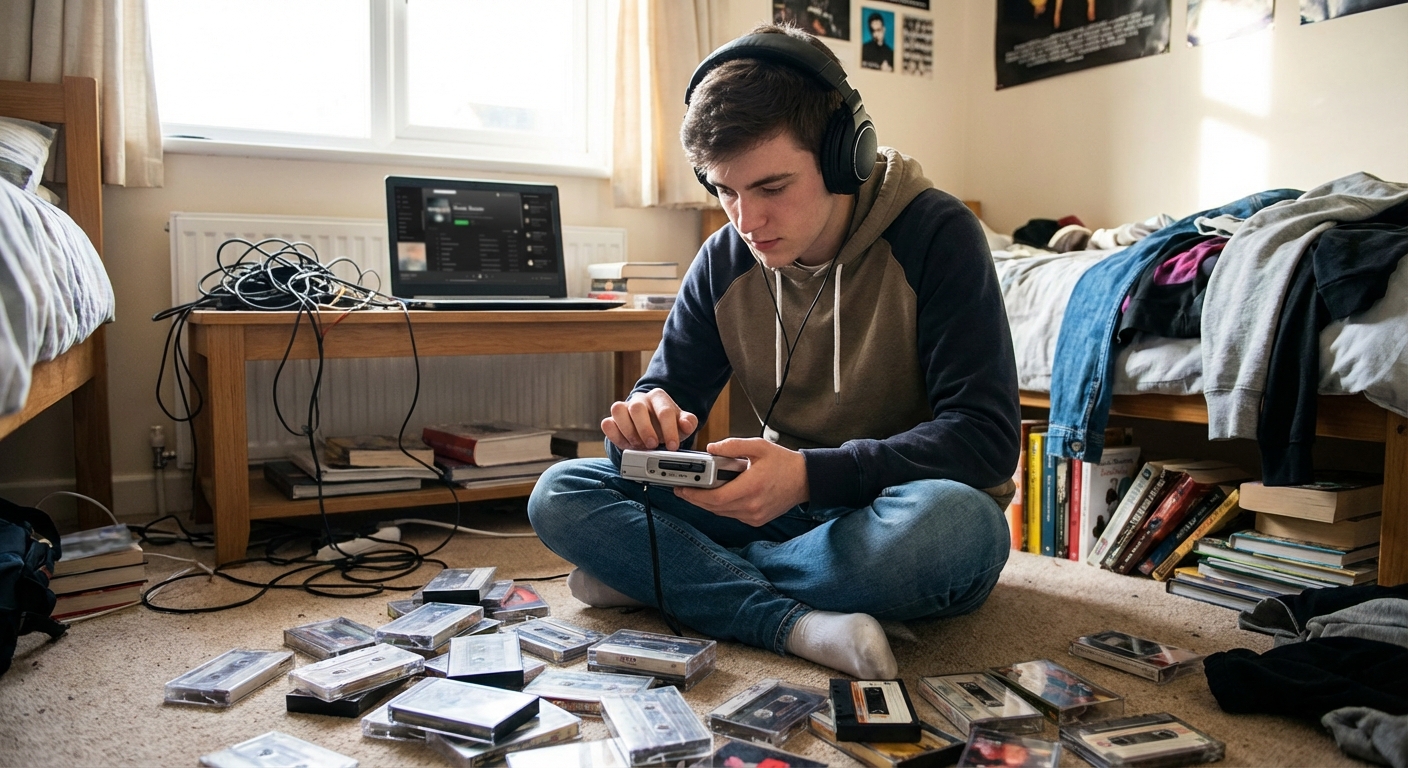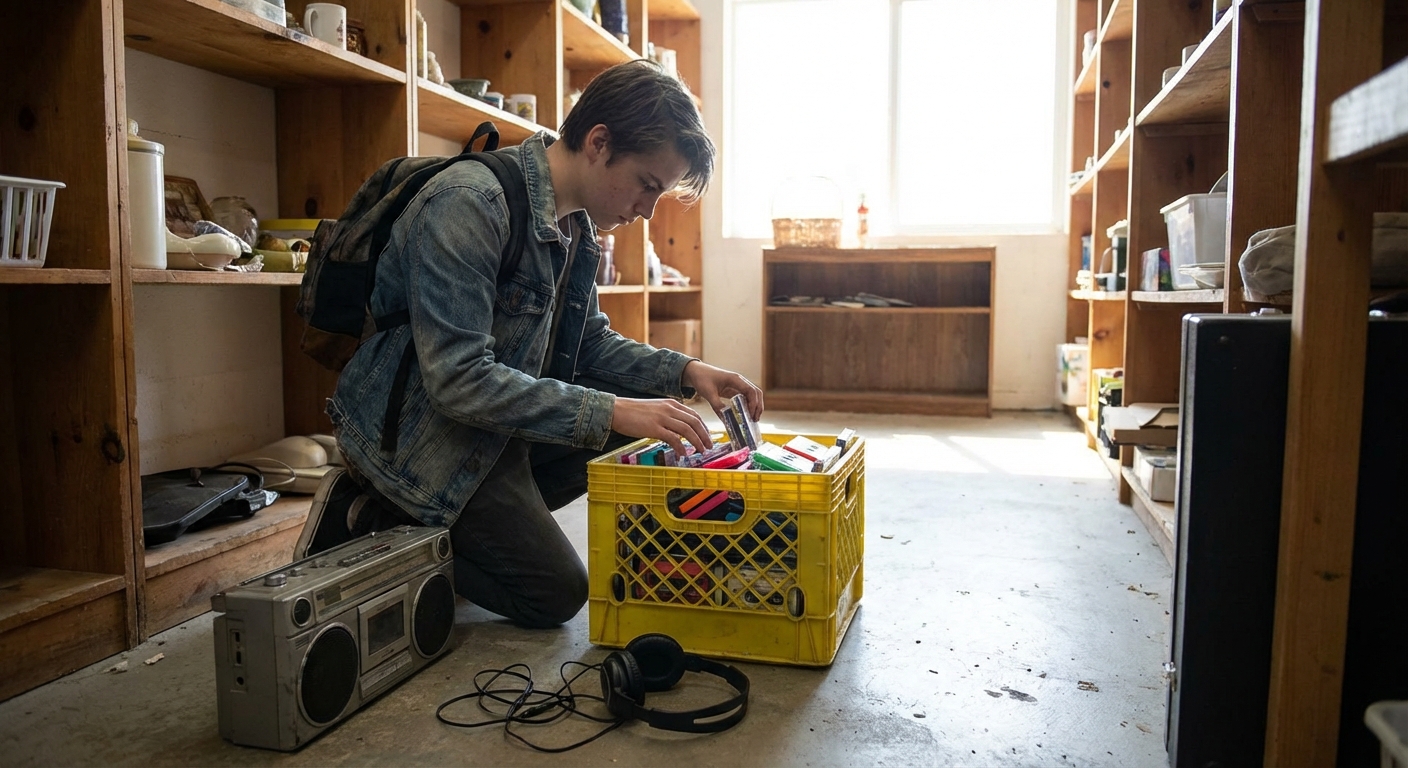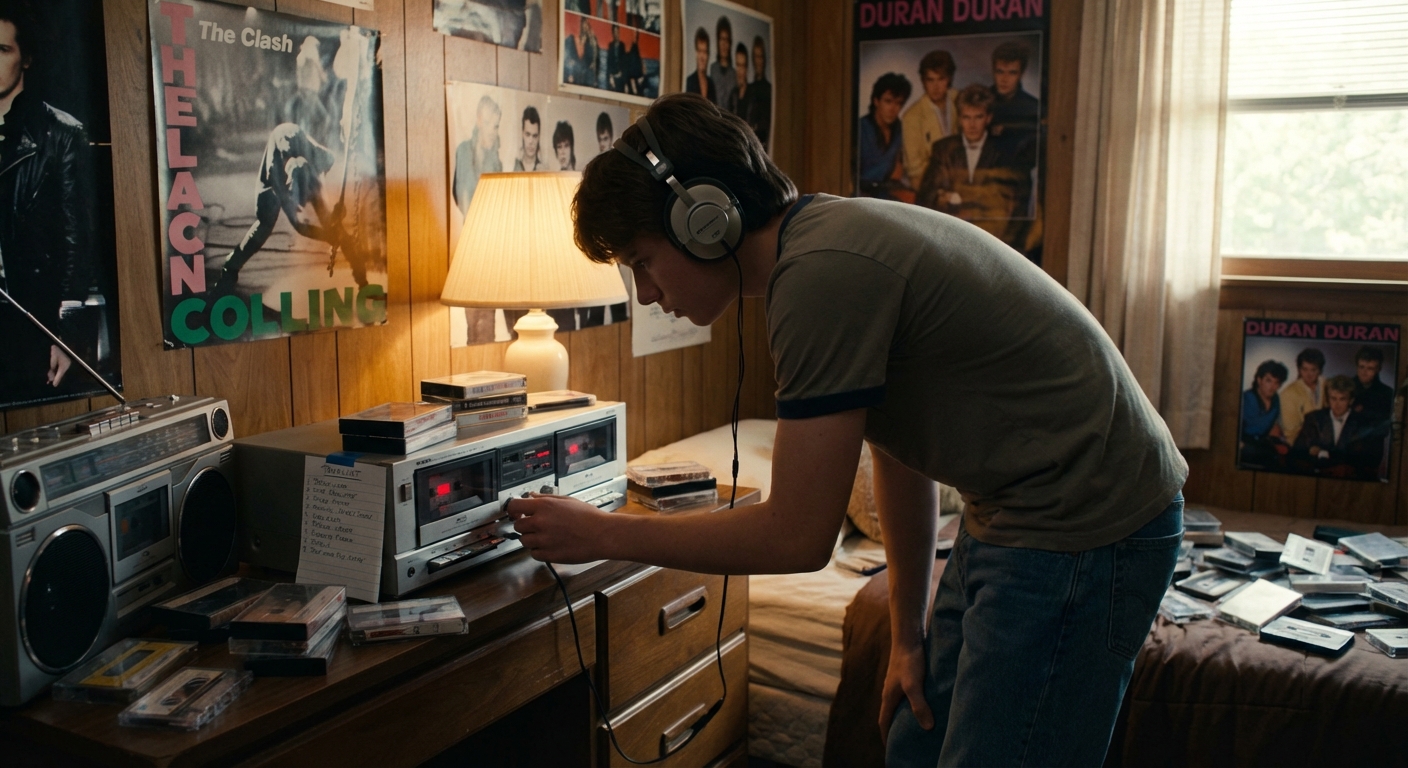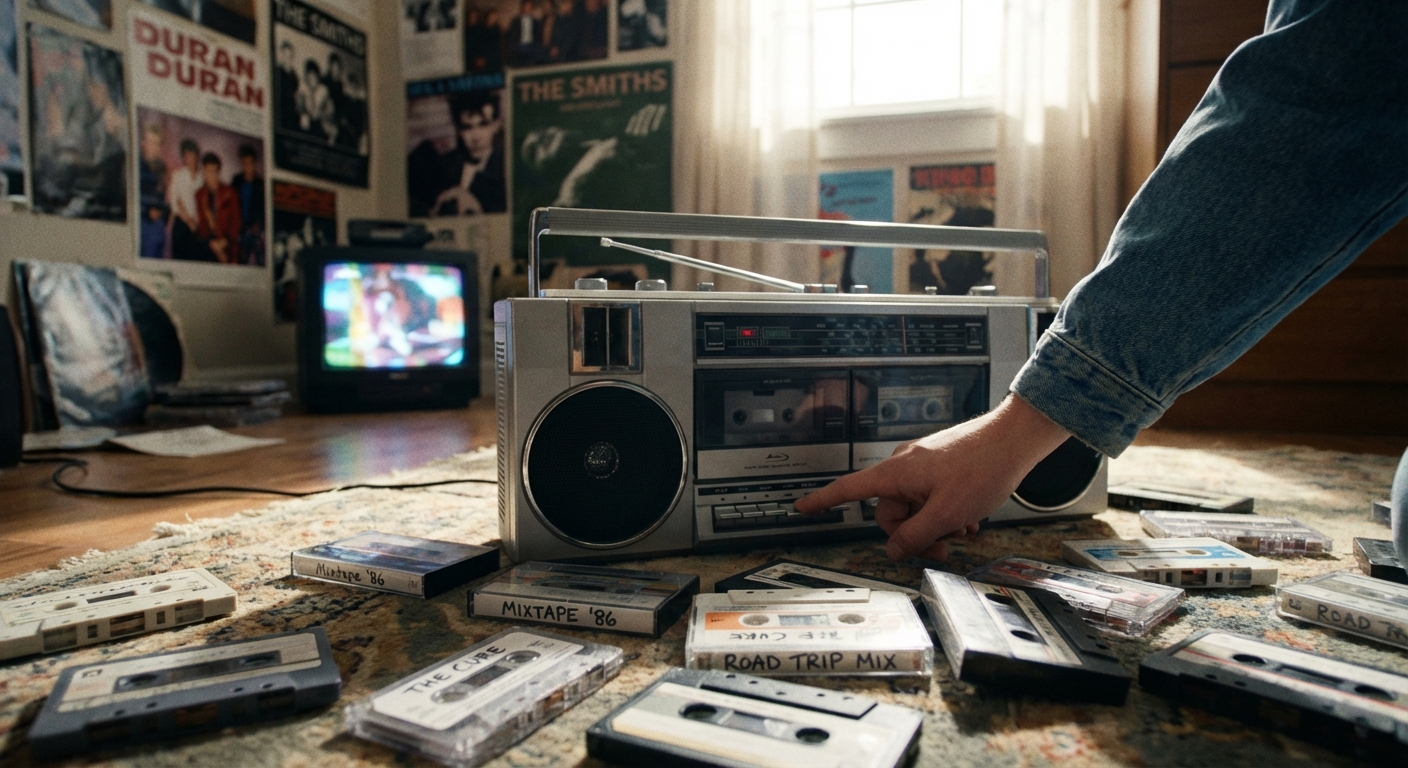
Spread your cassette collection across the floor, and you’re not just looking at tapes—you’re looking at a magnetic autobiography. Every scuffed shell and sun-faded J-card is a little fossil from an analog age when listening to music demanded patience, planning, and occasionally a pencil.
Your Life in 120 Minutes
Collecting cassettes isn’t only about the tapes themselves. It’s about the you implied between the spines—and the culture that wrapped itself around those small rectangles.
The Cultural Weather of the Cassette Era
To understand what a cassette collection says, you have to remember the world that created it.
Side A: Access and Autonomy
In the 70s and 80s, cassettes changed how people met music:
- Portability: The Walkman made songs walk-size—suddenly, soundtracks followed you to the bus stop, the park, your bedroom.
- Affordability: Pre-recorded tapes were often cheaper than LPs; blanks were reusable and endlessly reconfigurable.
- Recordability: Unlike records and most 8-tracks, you could tape off the radio, copy albums, and make mixes. Ownership blurred into authorship.
This shaped a generation’s relationship with sound: more personal, more hands-on, less reverent.
Side B: Community and Curation
The mixtape became social infrastructure:
- A crush got a tape.
- A friend with cool parents made you a “proper” version of that band you only knew from one single.
- Scenes formed around dubbed live shows, demo tapes, and local label runs.
Today’s cassette collectors are often, consciously or not, archiving this culture of shared curation.
Archetypes in the Cassette Shelf
Look at a person’s tape shelf long enough and archetypes emerge. Most collectors are a blend, but one or two usually dominate.
1. The Archivist of the Obscure
Shelf contents:
- Hand-labeled demo tapes.
- Local bands no one outside a 20-mile radius knew about.
- Spoken-word oddities, language-learning tapes from defunct publishers.
What it says:
- You see cassettes as audio anthropology.
- You’re drawn to dead ends, one-offs, and orphaned projects.
- The thrill is in rescuing things that would likely disappear otherwise.
Cultural context:
These collectors are the unsung heroes of niche histories. When someone writes about a forgotten regional scene in 20 years, it’ll be an Archivist lending them tapes.
2. The Mixtape Autobiographer
Shelf contents:
- Dozens of home-dubbed tapes with cryptic titles.
- Careful handwriting on J-cards, annotated tracklists.
- Unlabeled tapes that only the owner can recognize from little nicks and stickers.
What it says:
- You map your life through sequences of songs, not years.
- You like formats that invite editing and revision.
- Nostalgia hits you hardest in transition moments—the flip from Side A to Side B.
Cultural context:
This type channels the analog practice of making playlists that don’t update. Once you record, that’s the definitive version of that feeling.
3. The Label Logo Spotter
Shelf contents:
- Runs of albums from particular labels: 4AD, SST, Def Jam, Sub Pop, local imprints.
- Promo-only releases, samplers, and label-branded shells.
What it says:
- You think in ecosystems, not one-off records.
- You’re fascinated by how business, design, and sound interlock.
Cultural context:
In the cassette era, labels were taste-signals. If you trusted the logo, you’d risk your allowance on an unknown band. Collecting these runs is like mapping old trust networks.
4. The Car Stereo Historian
Shelf contents:
- Tapes with melted labels, cracked cases, heat-warped J-cards.
- Lots of compilations: soundtracks, “best of” collections, gas-station specials.
- Evidence of sun exposure and glove-box exile.
What it says:
- You associate music with motion and places, not just rooms.
- Your strongest memories smell faintly of upholstery and fast-food wrappers.
Cultural context:
Car stereos were huge for cassette culture. Road trips, commutes, teenage nights out—they all leaned on tapes that could take the bumps.
5. The Format Romantic
Shelf contents:
- Multiple copies of the same album in different shell variants.
- Sealed tapes never opened, plus daily drivers.
- Beautifully preserved early pressings.
What it says:
- You’re in love with the object as much as the sound.
- You appreciate industrial design: font choices, shell molding, leader tape colors.
Cultural context:
This type recognizes cassettes as examples of everyday industrial art—mass-produced, yes, but still imbued with design decisions that say a lot about their time.
Technical Traces of a Life Lived Loud
Cassettes age in revealing ways. Little technical quirks become emotional tells.
- Stretched tape on a favorite song? Someone rewound that part endlessly.
- Partial radio DJ intro at the start of a track? A recording timed just a hair late from FM.
- End-of-reel cutoff during a long live track? A past self calculating time and misjudging the last 30 seconds.
Collectors often report that their most prized tapes are not the rarest pressings but the ones bearing signs of use, of being truly lived with.
Anecdotes from Personal Archives
- The Surprise Diary: One collector bought a lot of used blanks. Several contained late-night monologues from a teenage boy in the early 90s—talking about school stress and band dreams. “I don’t know his name, but I know exactly how 16 felt to him.”
- The Tape That Raised a City: Another collector found a run of hip-hop tapes from a defunct local label, all from one neighborhood. They digitized them and shared them with a community center there. “People heard cousins, uncles, themselves at 19.”
- The Inherited Mixtape: A tape labeled “For the Drive to the Hospital” turned up in a thrift store. The tracklist was gentle, hopeful songs. No way to know how that drive ended—but the mix feels like a hand being held across time.
These stories show why cassette collecting hits so deep: you’re curating other people’s emotional artifacts alongside your own.
The Analog Skillset in a Digital World
Your cassette collection reveals habits that are almost radical now.
1. Patience
You accept:
- Rewinding takes time.
- Fast-forwarding overshoots.
- You might have to live with a song you’ve currently outgrown to reach the one you crave.
2. Commitment
Putting on a tape is a decision. There’s friction in the process: choosing a side, pressing physical buttons. Your collection says you’re not afraid of small commitments.
3. Tactile Attention
You:
- Notice different shell textures.
- Memorize spine designs.
- Remember which deck has the gentler eject.
To collect tapes is to keep part of your attention grounded in the physical world.
What Happens When New Tapes Join Old Stories
Modern cassette releases—DIY label runs, band tour tapes, art projects—slot into older collections like new chapters.
A shelf that once held only 80s pop and 90s alt-rock now hosts:
- Experimental noise tapes with risograph-printed covers.
- Lo-fi bedroom pop albums released in editions of 50.
- Spoken-word pieces from zine publishers.
Your collection becomes a bridge between eras:
- Analog past: mass-produced yet intimate.
- Analog-present: niche, pointedly un-mass, deliberately physical.
The through-line is the desire to slow listening down—to make it something you do on purpose.
Reading Your Own Collection
Try this low-tech exercise:
- Pull 10 tapes at random from your shelves.
For each, jot:
- Where you got it. - Who you were when you first played it. - Why you kept it. 3. Look for patterns.
You might find:
- You return to certain years over and over.
- You hoard road-trip tapes but rarely play them at home.
- You keep unloved albums for their cover art or for one perfect song.
Your cassette collection, read this way, is a collage of priorities and phases of self.
Why We Still Keep These Plastic Bricks
Technically, you could stream most of what you own on tape. Practically, that misses the point.
We keep cassettes because:
- They carry fingerprints, scuffs, and stickers.
- They have edges and weight, making memory feel solid.
- They enforce an almost-forgotten rhythm of listening.
A cassette collection says: I value formats that remember being touched.
In an age when most media vanishes into the same glowing rectangles, those clacky little shells on your shelf quietly insist that some experiences are better when they squeak, rewind, and occasionally need a gentle nudge from a pencil.